

About Company
AVM Capital Pte. Ltd.
Ashvin Murthy founded AVM Global Opportunity Fund in Nov 2016 after over a decade of experience trading complex derivatives for UBS in SG/ London/ Zurich and Natixis HK. Prior to launching AVM Global Opportunity Fund, Ashvin was Head of Asia Pacific FX Options in Natixis. He was instrumental in growing their commercial footprint, bringing Natixis the accolade of the 2nd best FX Solutions House in Asia in 2014. AVM Capital Pte. Ltd. (“AVM Capital”) holds a Registered Fund Management Company license with the MAS and is regulated by the MAS. AVM Capital Pte. Ltd. is a Singapore-based asset manager founded in 2016, specializing in macro hedge fund strategies. The firm integrates fundamental macroeconomic research with systematic processes to deliver risk-adjusted, uncorrelated returns across global markets.
Fund Snapshot
| ISIN | LU0344579056 |
| Share Class | A |
| Inception Date | Sep 2, 2008 |
| Drawdown Risk | Medium |
Fees
| Expense Ratio | Not Applicable |
| Fund Management Fee | 1.50% |
| Fund Performance Fee | 20.00% |
| ↳ High Water Mark | Yes |
Subscriptions
| Frequency | Monthly |
| Cutoff Date | 20 Mar 2026 6:00 PM SGT |
| Notice period | 7 Calendar Days |
| Estimated Nav Date | Mar 31, 2026 |
| Estimated Settlement Date | May 1, 2026 |
| Minimum Initial | USD 50,000.00 |
| Minimum Subsequent | USD 50,000.00 |
Fund Overview
The AVM Global Opportunity Fund follows a global macro investment strategy designed to deliver stable returns with relatively low portfolio volatility. The strategy invests across highly liquid global markets including fixed income, foreign exchange, commodities, and equities, with the goal of generating returns that are largely uncorrelated with traditional equity and bond markets. The core objective of the fund is capital preservation combined with consistent risk-adjusted returns. Instead of relying on a single asset class, the strategy identifies macroeconomic trends and expresses those views through liquid financial instruments. The investment process blends fundamental macroeconomic analysis with a systematic execution framework. The team analyzes key economic variables such as economic growth, inflation trends, liquidity conditions, and fiscal policy developments to identify potential investment opportunities. These macro signals are then translated into trade ideas with risk-adjusted position sizing and disciplined portfolio controls. The fund is managed by AVM Capital Pte. Ltd.. Key service providers supporting the fund include Citco Fund Administration as administrator and PwC as auditor. Prime brokerage services are provided by J.P. Morgan and Société Générale. Information on the regulatory license or supervising authority has not been publicly disclosed.Fund Strategy
The strategy aims to convert macroeconomic insights into investment positions using liquid instruments across multiple asset classes.| Strategy Component | Details |
| Strategy Type | Global Macro (low-volatility, risk-managed) |
| Core Asset Classes | Fixed income, foreign exchange, equities, commodities |
| Typical Holding Period | 3–6 months |
| Investment Objective | Diversified returns with low correlation to traditional assets |
Core Investment Instruments
| Asset Class | Instruments Used |
| Fixed Income | Sovereign bonds, bond futures, interest-rate futures |
| Currency Markets | FX spot, forwards, and options |
| Equities | Equity index futures and liquid ETFs |
| Commodities | Commodity futures |
| Other Instruments | Credit exposure, cash equities, equity swaps |
Portfolio Construction
Portfolio construction is driven by risk allocation rather than capital allocation. Each potential trade is assigned a specific risk budget, and positions are introduced only after passing both fundamental validation and quantitative testing.| Portfolio Attribute | Details |
| Liquidity Preference | Exchange-traded and highly liquid instruments |
Risk Management
Risk control is embedded into every stage of the investment process to maintain the fund’s low-volatility objective.| Risk Control Mechanism | Description |
| Risk Budgets | Each trade is sized according to predefined risk limits based on conviction and instrument volatility |
| Targets & Stop Losses | Positions include clear exit targets and stop-loss thresholds |
| Portfolio Constraints | Exposure limits ensure diversification and prevent excessive concentration |
| Stress Testing | Scenario analysis tests the impact of extreme changes in correlations and volatility |
Risks of Investing
Market and Liquidity Risk
Global markets can experience sudden price swings due to economic events, geopolitical developments, or shifts in investor sentiment. During market stress, liquidity conditions may deteriorate, making it harder to exit positions.Derivatives and Leverage Risk
The use of futures, swaps, and options can amplify both gains and losses. These instruments may also introduce margin requirements and counterparty risk.Currency Risk
Exposure to multiple currencies means exchange-rate fluctuations can affect the fund’s overall returns.Key-Person Risk
The strategy relies significantly on the expertise of its senior investment professionals. Any changes in the leadership team could affect strategy execution.Operational Risk
Operational disruptions, including technology failures or service-provider issues, may impact fund operations and execution processes.Why Consider This Fund?
| Key Attribute | Details |
| Annualized Return Since Inception | 9.84% |
| Sharpe Ratio | 2.09 |
| Sortino Ratio | 2.68 |
| Inception | November 2016 |
Learn about the experienced fund managers responsible for investment decisions, portfolio strategy, and long-term fund performance.

Ashvin Murthy
Ashvin Murthy founded AVM Capital in 2016 and leads the investment strategy. Prior to launching the firm, he worked in fixed income derivatives trading at UBS across Singapore, London, and Zurich. He also served as Head of FX Options at Natixis in Hong Kong. His academic credentials include a Diplôme d’Ingénieur from École Centrale Paris and an M.Sc. in Financial Engineering from Columbia University.

Serena Teoh
Serena Teoh oversees risk management, fund accounting, operational controls, and product management. Before joining AVM Capital, she served as Chief Risk Officer at Southern Ridges Capital and previously held risk management roles at the Bank for International Settlements, Maybank, and Credit Suisse. She holds a B.Sc. in Statistics from the National University of Singapore and is a certified Financial Risk Manager (FRM).
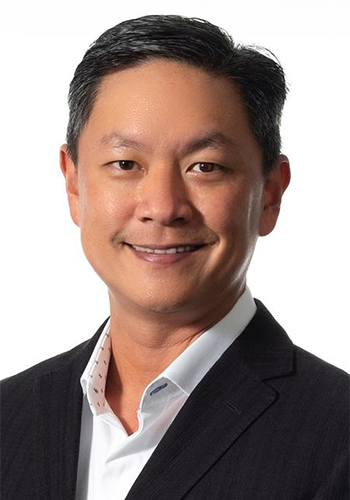
Leon Lee, CFA
Leon Lee has more than two decades of experience across asset management and private wealth advisory. He previously held senior roles at Bank of Singapore and Citi Private Bank. He holds a degree in Accounting and Finance from the University of Western Australia.
Find answers to common questions about fund investments, performance, portfolio strategy, and investor services.
The AVM Global Opportunity Fund follows a global macro strategy designed for capital preservation and stable returns. It identifies macroeconomic trends—such as inflation, growth, and fiscal policy—and expresses those views through highly liquid instruments across fixed income, foreign exchange, commodities, and equities.
The fund is specifically designed as a low-volatility strategy. It utilizes a systematic execution framework with disciplined portfolio controls, including risk-adjusted position sizing and stop-loss thresholds. By investing in liquid global markets, the AVM Global Opportunity Fund aims to generate returns that are largely uncorrelated with traditional asset classes.
The AVM Global Opportunity Fund offers Monthly subscription frequency. Investors are required to provide a notice period of 7 calendar days before the cutoff date. The minimum initial and subsequent investment amounts for this fund are both set at USD 50,000.00.
The fund charges a Management Fee of 1.50% per annum. Additionally, there is a Performance Fee of 20.00%, which is subject to a High Water Mark. This ensures that the manager only earns performance-based incentives after recovering any previous losses in the portfolio's value.
The fund is supported by leading institutional service providers to ensure operational transparency. Citco Fund Administration serves as the administrator, and PwC acts as the auditor. Prime brokerage services for the AVM Global Opportunity Fund are provided by J.P. Morgan and Société Générale.
Connect with our investment experts for personalized guidance, fund details, and support tailored to your financial needs.

Get In Touch
Disclaimer: Investing in AIF, PMS, Gift City or Mutual Fund is subject to market risk. Please read the related documents carefully. Past performance does not guarantee future results and there is no assurance that the managed accounts will necessarily achieve their objectives. Actual portfolios may differ as a result of account size, client-imposed investment restrictions, the timing of client investments and market, economic, and individual company factors. We at ALTPORT do not guarantee any returns in the hands of investors, nor do we take any sort of accountability for the performance of the scheme.
Explore expert insights, market trends, investment strategies, and informative articles related to funds and wealth management.
Top Alternative Investment Funds for HNI Investors: A 360° Comparison
Read MoreRenaissance Absolute Return Alpha Portfolio Review 2025: Performance, Strategy and Expert Insights
Read MoreHow Investment Decision Frameworks Are Built for AIF and PMS Portfolios
Read MoreRisk Management in High-Conviction Funds: How the Singularity Fund Controls Drawdowns
Read MoreDiscover other investment funds that may align with your financial goals, risk appetite, and long-term portfolio strategy.