

About Company
BayFort Capital
BayFort Capital is an international investment management and advisory firm founded in 2021 by former Franklin Templeton fund manager Ketul Sakhpara, specializing in managing concentrated, high-growth portfolios of top global companies. Focused on sectors like AI, robotics, and fintech, the firm utilizes a proprietary "RIGHT Analysis" to identify companies with strong moats, primarily focusing on US-listed entities. Based in Mumbai, it helps investors, particularly in India, diversify their portfolios to reduce volatility and hedge against currency depreciation.
What Is the BayFort Capital Global Leaders Portfolio?
The BayFort Capital Global Leaders Portfolio is a concentrated global large-cap growth strategy designed to invest in leading businesses across international markets.
The portfolio focuses primarily on companies with strong competitive advantages, scalable business models, quality financials and long-term growth potential. Its investment universe includes innovation-led sectors such as artificial intelligence, robotics, cloud infrastructure, fintech, biotechnology, autonomous mobility and renewable energy.
The strategy was launched on 1 July 2022 and uses the S&P 500 as its benchmark. Rather than simply replicating an index, the portfolio follows an active, bottom-up approach focused on a relatively small number of high-conviction companies.
Its geographic opportunity set is led by the United States, while also considering opportunities across Europe, Israel, Latin America and Asia-Pacific.
For investors exploring broader international exposure, the strategy offers a route to participate in global businesses alongside their Indian equity holdings.
How the Global Leaders Portfolio Works
The Global Leaders Portfolio is structured to provide investors with direct exposure to international equities through a managed account structure.
The investment process involves establishing an international brokerage account, funding it through the applicable Liberalised Remittance Scheme (LRS) route and implementing the portfolio through international securities.
The published portfolio information identifies Interactive Brokers as the international brokerage platform and the US DTC system as the custody infrastructure.
In practical terms, the investment journey broadly involves:
- Investor onboarding: Completion of the required application, KYC and account-opening documentation.
- International brokerage account: Establishment of the relevant investment account through Interactive Brokers.
- Remittance from India: Funds are remitted from the investor's Indian bank account under the applicable LRS framework.
- Foreign-currency conversion: The remitted amount is converted into the relevant foreign currency.
- Portfolio implementation: The investment manager purchases securities according to the Global Leaders investment strategy.
- International custody: The underlying securities are held through the specified international custody infrastructure.
- Ongoing portfolio management: The manager continuously reviews companies, valuations, business fundamentals, sector developments and the original investment thesis.
For resident individuals, the RBI's LRS framework permits foreign exchange remittances of up to USD 250,000 per financial year for permitted transactions, subject to applicable rules.
This structure differs from investing in an Indian mutual fund that provides overseas exposure. Here, the investor is participating in an international investment arrangement involving an overseas account, foreign-currency exposure and additional tax and reporting considerations.
BayFort Capital Global Leaders Portfolio: Snapshot
| Parameter | Details |
| Portfolio | BayFort Capital Global Leaders Portfolio |
| Strategy | Global Large Cap Growth |
| Fund Manager | Ketul Sakhpara, CFA |
| Launch Date | 1 July 2022 |
| Benchmark | S&P 500 |
| Portfolio Size | 18–25 stocks |
| Minimum Investment | ₹10 lakh |
| Annual Management Fee | 2.5% including GST |
| Redemption Charge | None |
| Lock-in Period | None |
| Geographic Focus | Primarily US, with global opportunities |
| International Broker | Interactive Brokers |
| Custody | US DTC system |
| Market-Cap Focus | USD 10 billion and above |
| Maximum Position Size | Less than 20% per stock |
The portfolio follows a concentrated investment philosophy, with approximately 18–25 companies selected through BayFort Capital's investment process.
BayFort Capital Global Leaders Portfolio Investment Strategy
The investment philosophy of the Global Leaders Portfolio is built around identifying global businesses capable of creating sustainable value over the long term.
Instead of spreading capital across hundreds of securities, the strategy concentrates on companies where the investment team identifies strong structural growth, competitive advantages and attractive risk-reward characteristics.
RIGHT Analysis
BayFort Capital uses its proprietary RIGHT Analysis framework as part of its investment-selection process.
The framework starts with a broader stock universe and progressively narrows it down through multiple layers of fundamental analysis.
1. Build the Investment Universe
The process begins by identifying approximately 100 companies across sectors that are considered attractive from a structural growth and innovation perspective.
2. Right to Win and Innovation
The next stage evaluates whether a company has a sustainable competitive advantage and the ability to remain relevant as its industry evolves.
Innovation is an important consideration, particularly in sectors experiencing technological disruption.
3. Growth and TAM Analysis
Companies are then assessed based on their growth potential and Total Addressable Market (TAM).
The objective is to identify businesses operating in markets that can expand significantly over time and provide a long runway for revenue and earnings growth.
4. Valuation Discipline
Growth alone is not sufficient. The investment process also considers valuation.
The objective is to balance the quality and growth potential of a company against the price being paid for that growth.
5. High-Conviction Portfolio Construction
The final portfolio consists of the companies that demonstrate the strongest combination of business quality, growth opportunity, competitive advantage and valuation attractiveness.
This creates a concentrated portfolio where individual positions can have a meaningful impact on overall performance.
Key Investment Themes
The strategy has identified opportunities across several structural growth themes, including:
- Artificial Intelligence
- Robotics
- Cloud Infrastructure
- Fintech
- Digital Platforms
- Autonomous Vehicles
- Biotechnology
- Telehealth
- Renewable Energy
The approach is therefore not simply about buying large companies. It focuses on identifying businesses positioned to benefit from long-term changes in technology, consumer behaviour and global economic activity.
Why Global Diversification: Currency and Volatility
Global investing can add another dimension to an India-focused portfolio by providing exposure to businesses, industries and currencies that may not be adequately represented in the Indian market.
BayFort Capital's investment rationale includes diversification across markets and currencies, alongside access to global companies operating in areas where Indian investors may have limited direct investment opportunities.
The portfolio has historically maintained significant exposure to the United States while also looking for opportunities in other international markets.
Global diversification can also provide currency diversification.
If the rupee depreciates against the foreign currency in which an investment is held, the INR value of the foreign investment may increase, all else being equal. However, the reverse is also true: rupee appreciation can reduce the INR value of foreign-currency investments.
Therefore, currency exposure should not be viewed as a one-way hedge. Currency movements can contribute positively or negatively to an investor's final INR return.
For investors who already have a substantial concentration in Indian assets, international equities can provide exposure to different economies, business models and market cycles.
Minimum Investment, Fees and How to Invest
The published minimum investment for the Global Leaders Portfolio is ₹10 lakh.
The stated annual management fee is 2.5%, including GST. The published portfolio information also specifies no redemption charge and no lock-in period.
The broad investment process for an eligible Indian resident involves:
Step 1: Complete the required investment and account-opening documentation.
Step 2: Establish the relevant international brokerage account.
Step 3: Remit funds from an Indian bank account under the applicable LRS framework.
Step 4: Complete foreign-currency conversion and fund the international account.
Step 5: The portfolio is implemented according to the Global Leaders investment strategy.
The ₹10 lakh minimum is lower than the standard ₹50 lakh minimum generally applicable to clients of a SEBI-registered portfolio manager, subject to applicable regulatory provisions and exceptions.
Therefore, the investment minimum by itself should not be used to determine the regulatory classification of the product. Investors should understand the legal structure, account arrangement and applicable regulatory framework before investing.
How Are International Equity Investments Taxed for Indian Investors?
International equities have different tax considerations from Indian listed equity.
For an Indian resident, gains from foreign shares are generally taxable in India. Foreign shares that are not listed on a recognised Indian stock exchange are generally subject to a 24-month holding period for determining whether gains are long-term or short-term.
For transfers on or after 23 July 2024, long-term capital gains on such foreign shares are generally taxed at 12.5% without indexation, plus applicable surcharge and cess.
For holdings of 24 months or less, gains are generally treated as short-term capital gains and taxed at the applicable income-tax slab rate.
| Holding Period | General Tax Treatment |
| 24 months or less | Short-term capital gain; generally taxed at applicable slab rate |
| More than 24 months | Long-term capital gain; generally 12.5% without indexation |
The LTCG exemption available for specified Indian listed equity under Section 112A should not automatically be assumed to apply to foreign shares.
TCS on LRS Remittances
Tax Collection at Source may apply when funds are remitted overseas under LRS.
For LRS remittances falling under the applicable investment/other-purpose category, the current framework provides a ₹10 lakh annual threshold, with TCS generally applying to the amount exceeding that threshold.
TCS is a collection mechanism and may generally be claimed as tax credit by the taxpayer while filing the income-tax return, subject to applicable rules.
Foreign Asset Disclosure
Indian residents holding reportable foreign financial assets may have foreign-asset disclosure requirements in their income-tax returns.
Foreign equity and other reportable foreign assets may need to be disclosed under the applicable Schedule FA requirements.
The exact tax and reporting treatment can depend on residential status, nature of investment, holding period, income level and other individual circumstances. Investors should consult a qualified tax professional for advice specific to their situation.
Key Risks of Investing in the Global Leaders Portfolio
A concentrated global equity strategy can provide access to high-conviction ideas, but concentration can also increase portfolio-specific risk.
Concentration Risk
With approximately 18–25 stocks, the portfolio is more concentrated than a broad global index. A significant decline in one or more holdings can have a material impact on overall portfolio performance.
US and Single-Market Risk
The portfolio has substantial exposure to the United States. Changes in US interest rates, economic conditions, regulation, taxation or market valuations can therefore influence portfolio performance.
Currency Risk
Currency movements can work in both directions. Rupee depreciation can increase the INR value of foreign assets, while rupee appreciation can reduce their INR value.
Sector Concentration
Exposure to themes such as AI, technology, robotics and digital businesses can create additional sensitivity to technological changes, regulation, competition and changes in investor expectations.
Valuation Risk
High-growth businesses can trade at premium valuations. If growth expectations weaken or market valuations contract, stock prices may decline even when the underlying business remains fundamentally sound.
Market Risk
International equities remain exposed to market volatility, economic cycles, geopolitical events, interest-rate changes and shifts in investor sentiment.
Cross-Border Operational Risk
International investing involves additional considerations around overseas brokerage accounts, currency conversion, remittances, custody and regulatory requirements.
Regulatory Risk
LRS rules, taxation, foreign investment regulations and reporting requirements can change over time. Such changes may affect the cost, convenience or structure of international investing.
Liquidity Risk
Although many global large-cap companies have highly liquid markets, liquidity conditions can vary between securities and can deteriorate during periods of market stress.
Who May Consider the Global Leaders Portfolio?
The Global Leaders Portfolio may be relevant for investors who:
- Want international equity exposure alongside Indian investments
- Seek exposure to global businesses and innovation-led sectors
- Are comfortable with a concentrated portfolio
- Understand foreign-currency exposure and its two-way impact
- Have a long-term investment horizon
- Are comfortable with the operational requirements of an international investment account and LRS remittance
It may be less suitable for investors looking for highly diversified investments, guaranteed returns, low-volatility products or a simple domestic investment structure.
Listen to expert conversations and investment insights anytime on Spotify.

Watch our podcast episodes featuring expert interviews, market insights, investment strategies, and in-depth discussions on the latest financial trends.

Learn about the experienced fund managers responsible for investment decisions, portfolio strategy, and long-term fund performance.
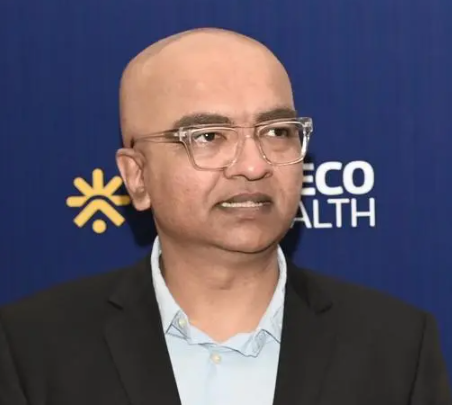
Ketul Sakhpara
Ketul Sakhpara, CFA, Founder of BayFort Capital, brings over 26 years of cross-functional experience spanning equity research, fund management, and technology innovation. Prior to founding BayFort, he served as Head of Equity Research at Mahindra Manulife Mutual Fund and earlier managed Franklin Templeton’s Global Infrastructure Fund from New York, where he led global research across regions including Europe, South America, Australia, and China, contributing to a consistent four-star Morningstar rating for the flagship fund. He was also part of a long-short equity hedge fund at Tudor Pickering in the US, which outperformed the CS Hedge Fund Index across periods. Earlier in his career, he worked as a Senior Research Engineer at Samsung’s Wireless Terminals Lab in Dallas, holding multiple patents in mobile technology. He is a CFA charterholder with a Bachelor’s in Engineering from the University of Pune, an MS from Rochester Institute of Technology, and an MBA from the University of Texas at Austin.
View Profile →Our Investment Experts
Our experts will understand your goals, map the right strategy across AIFs, PMS, Mutual Funds and Wealth Solutions, and guide you through every step.
Find answers to common questions about fund investments, performance, portfolio strategy, and investor services.
The structure of the Global Leaders Portfolio should be understood from the applicable investment and account documentation. The ₹10 lakh investment minimum should not by itself be interpreted as the standard minimum for a SEBI-registered PMS. SEBI regulations generally prescribe a ₹50 lakh minimum for clients of a portfolio manager, subject to applicable exceptions and regulatory provisions. Investors should therefore confirm the exact legal and regulatory structure applicable to their investment before committing capital.
The portfolio is managed by Ketul Sakhpara, CFA, Founder of BayFort Capital.
The minimum investment is ₹10 lakh.
The portfolio is designed to hold approximately 18–25 stocks, reflecting its concentrated, high-conviction investment approach.
The strategy primarily focuses on the United States while considering opportunities across global markets including Europe, Israel, Latin America and Asia-Pacific. Its investment themes include artificial intelligence, robotics, cloud infrastructure, fintech, biotechnology, autonomous vehicles, telehealth and renewable energy.
RIGHT Analysis is BayFort Capital's proprietary investment framework. It forms part of the process used to identify companies with strong competitive advantages, innovation potential, attractive growth opportunities, large addressable markets and reasonable valuations. The process moves from a broader investment universe toward a concentrated portfolio of high-conviction opportunities.
An eligible Indian resident can remit funds overseas through the Liberalised Remittance Scheme (LRS) using an authorised dealer bank, subject to applicable RBI rules. The current LRS limit for permitted transactions is USD 250,000 per resident individual per financial year. The investment process generally involves completing account-opening formalities, funding the international account through an LRS remittance and subsequently implementing the portfolio.
The published portfolio information identifies Interactive Brokers as the international brokerage platform and the US DTC system as the custody infrastructure. The exact ownership arrangement should be understood from the account-opening and investment documentation applicable to the investor.
For foreign shares, gains on holdings of more than 24 months are generally treated as long-term capital gains and taxed at 12.5% without indexation, plus applicable surcharge and cess. Gains on holdings of 24 months or less are generally treated as short-term capital gains and taxed at applicable slab rates.
Yes, TCS may apply to LRS remittances depending on the purpose and amount of remittance. For applicable investment/other-purpose remittances, the current framework provides a ₹10 lakh annual threshold, with TCS generally applying to the amount above that threshold.
Indian residents with reportable foreign assets or foreign income may have to disclose them in the applicable income-tax return schedules. Foreign equity holdings can fall within the foreign-asset reporting requirements, including Schedule FA, depending on the taxpayer's circumstances.
The published fee for the Global Leaders Portfolio is 2.5% per annum including GST. The published information specifies no redemption charge and no lock-in period. Investors should review the applicable documentation for any additional brokerage, remittance, currency-conversion, custody or other charges.
An international mutual fund, a GIFT City fund and a managed international portfolio can all provide global equity exposure, but their structures are different. An international mutual fund generally provides exposure through a pooled investment vehicle. A GIFT City fund or feeder provides international exposure through the International Financial Services Centre ecosystem. The Global Leaders Portfolio follows a managed-account approach involving international brokerage and custody infrastructure. The differences can be considered across ownership structure, taxation, costs, liquidity, investment minimums, currency exposure and regulatory framework.
The key risks include concentration risk, US and international market risk, currency fluctuations, sector concentration, valuation risk, equity-market volatility, cross-border operational considerations, regulatory changes and liquidity risk. Global diversification can complement an India-focused portfolio, but it does not eliminate investment risk. International markets and currency movements can increase or reduce returns when measured in Indian rupees.
Subscribe to the ALTPORT newsletter
Join HNIs, family offices and NRI investors reading with us.
You're on the list
Thanks — we've added your email to the ALTPORT newsletter.