
About Company
Helios Capital Asset Management (India) Pvt. Ltd
Helios -In Greek mythology, Helios is the God of Sun – the brightest star in the sky that has been universally worshipped as the natural source of light, energy, warmth, and nutrition on Earth since the start of time. According to mythology, Helios rode his chariot across the sky from east to west every day pulling the sun, and each night he rode back to the east, to diligently start again next morning. In addition, according to Hometic poems, Helios is described as the God who sees and hears everything and had an ethical and prophetic nature. Helios Capital is inspired by “Helios” for he has all the qualities one would seek in a good fund manager: strong purpose carried out with diligence, ability to see everything from his vantage point and an ethical and prophetic nature. Helios India is licensed by Securities & Exchange Board of India to offer Portfolio Management Services (PMS). Their flagship investment product is the Helios India Rising Portfolio.Singapore based Helios Capital Management Pte. Ltd. (“Helios”), holding a Capital Markets Services License from the Monetary Authority of Singapore, and registered as a Foreign Portfolio Investor with the Securities and Exchange Board of India. Helios, founded in 2005, currently manages both India focused long/short and long only funds/mandates and a globally focused long only fund. Founders of Helios (Dave Williams, Karan Trehan, and Samir Arora) have senior asset management experience and were pioneers in Indian asset management industry jointly setting up one of India’s first private sector AMCs in 1994 (in their prior roles). Additionally, Samir Arora has one of the longest track records (26+ years on the long side) in the Indian fund management business. He is also one of the most experienced India fund managers on the short side with a 15+ year track record.
What Is Helios India Rising Fund II?
Helios India Rising Fund II is a closed-ended, long-only Category III AIF from Helios Capital that invests in Indian listed equities for long-term capital appreciation, without short selling. It runs under Helios India Alternate Fund, has a four-year tenure extendable by two years, and required a minimum commitment of ₹1 crore. The fund closed to fresh subscriptions on 15 September 2023, so this page explains its structure, strategy and terms for existing investors and researchers rather than as an open offer.
Helios India Rising Fund II Snapshot
| Particular | Details |
|---|---|
| Fund | Helios India Rising Fund II |
| Structure | Closed-ended Category III AIF |
| Status | Closed to fresh subscriptions since 15 September 2023 |
| Investment Style | Long-only Indian listed equity |
| Investment Manager | Helios Capital Management India Pvt. Ltd. |
| Fund Manager | Dinshaw Irani |
| Tenure | 4 years, extendable by up to 2 years |
| Minimum Commitment | ₹1 crore (25% first drawdown) |
| Lock-in | 12 months from Final Drawdown |
| Exit Load | 3% between 12 and 24 months; 1% after 24 months |
| Liquidity | Quarterly exit windows after lock-in |
| Performance Fee | 15%, no catch-up |
| Hurdle Rate | 10% XIRR (share classes B1–B4) |
| NAV Disclosure | Computed daily, shared quarterly |
| Trustee | Amicorp Trustees India Private Limited |
| Custodian | Kotak Mahindra Bank Ltd |
Helios India Rising Fund II Investment Strategy
Helios India Rising Fund II builds a long-only portfolio by rejecting any stock that fails on even one of eight factors, then buying from what remains. Helios's view is that it is easier to spot what is bad than what is good, and that removing the bad lowers the cost of mistakes.
The eight filters are:
- Good theme and size of opportunity
- Favourable industry dynamics
- Low potential for disruption
- Strong management, background and strategy
- Good corporate governance
- Clean accounting
- Positive medium-term triggers
- Reasonable valuation
Industry analysis covers penetration, capital intensity, competition, dependence on government policy, monopoly or duopoly structure, and disruption from new technology, business models or PE-funded rivals. Company analysis looks at history, growth discipline, barriers to entry and capital allocation.
How Helios Checks Governance and Accounting Quality
Helios India Rising Fund II screens out companies with weak governance or aggressive accounting through a forensic review of financial statements before any investment.
Governance checks: related-party transactions, independence of directors, conflicts of interest, options and warrants, and suspicious price movements.
Accounting checks: long-term growth, ROCE and ROE trends; book value growth versus reported profit; losses taken straight to the balance sheet; receivable sell-downs; early revenue recognition; leverage trends; cash flow versus earnings; R&D capitalisation; the true cost of foreign-currency debt; stretched payables; and expenses shifted to later periods.
Helios India Rising Fund II Preferred Themes and Themes to Avoid
Helios India Rising Fund II favours "non-zero-sum" themes where many companies can grow at once, and avoids areas where returns depend on global prices, intense competition or the state.
Preferred themes:
- Private sector competing with government: private companies winning share from state-owned firms in banking, insurance, healthcare, education and, occasionally, infrastructure.
- Demographic and lifestyle change: underpenetrated categories such as air conditioning, wealth management, mortgages, retail, tourism, branded goods, quick-service restaurants and online services, plus the shift from unorganised to organised business after GST.
- Factor-cost advantage: globally competitive Indian sectors such as IT services, contract research, pharmaceuticals and speciality chemicals.
Themes avoided: commodities driven by global prices, "one billion consumer" stories in crowded industries, state-owned companies, and Indian businesses expanding aggressively abroad.
Helios India Rising Fund II Portfolio Construction and Sell Discipline
Helios India Rising Fund II holds roughly 25–40 stocks split between two groups: established high-quality companies and emerging winners.
| Group | Stocks | Weight | Role |
|---|---|---|---|
| "Good" stocks | 10–15 | ~50–60% | Consistent businesses with strong moats and profit visibility; high confidence of reasonable returns |
| "Emerging" good stocks | 15–25 | ~40–50% | Businesses with potential for re-rating as the market discovers them; reasonable confidence of high returns |
Stocks are bought with a one-to-three-year initial view and held for longer if the thesis holds. Long-term does not mean "buy and forget": a stock may be sold if fundamentals worsen, something unexpected happens, its price runs far ahead of earnings growth, or valuation becomes too high, even for an excellent business.
Helios India Rising Fund II Minimum Commitment, Drawdowns and Liquidity
Helios India Rising Fund II required a minimum commitment of ₹1 crore, drawn down in stages: 25% on signing the contribution agreement and the rest as called during the commitment period.
| Share Class | Commitment |
|---|---|
| B1 / C1 | ₹1 crore to below ₹2 crore |
| B2 / C2 | ₹2 crore to below ₹5 crore |
| B3 / C3 | ₹5 crore to below ₹10 crore |
| B4 / C4 | ₹10 crore and above |
The fund has a four-year tenure, extendable by up to two years. Units are locked in for 12 months from the Final Drawdown; after that, investors can exit in quarterly windows, paying an exit load of 3% between 12 and 24 months and 1% after 24 months.
Helios India Rising Fund II Fees and Hurdle Rate
Helios India Rising Fund II charges a 15% performance fee with no catch-up, applied above a 10% hurdle measured by XIRR for share classes B1 to B4. XIRR accounts for the timing of each drawdown, which suits a fund where capital is called in stages. The hurdle is a fee threshold, not a promised return; the PPM and contribution agreement set the final terms.
Is Helios India Rising Fund II Open for New Investment?
No. Helios India Rising Fund II closed to fresh subscriptions on 15 September 2023. The ₹1 crore minimum and share classes describe how the fund was offered, not an open invitation. Investors interested in Helios's approach can explore the open-ended Helios India Long Short Fund or speak to an ALTPORT advisor about current long-only Category III AIFs.
Helios India Rising Fund II Risks
The main risks of Helios India Rising Fund II are equity-market, concentration, valuation, liquidity, extension and capital-loss risk.
Equity-market risk: Company news, earnings, the economy, interest rates and market sentiment can push prices down.
Concentration risk: With 25–40 stocks, single companies or sectors can drive results.
Closed-ended structure: There are no continuous redemptions; exits are limited to quarterly windows after a 12-month lock-in.
Liquidity risk: Exit timing depends on the exit windows, and thin trading in some stocks can affect portfolio moves.
Valuation risk: A good company bought at a high price leaves little room for error.
Capital-loss risk: With no short book to offset falls, investors can lose part or all of their capital.
Extension risk: The four-year tenure can be extended by up to two years.
Helios India Rising Fund II vs Helios India Long Short Fund
Helios India Rising Fund II is a closed-ended long-only AIF, while Helios India Long Short Fund is open-ended and uses short positions, futures and leverage. Both use Helios's research process. See long-short AIFs and mutual fund vs PMS vs AIF for more on these structures.
Listen to expert conversations and investment insights anytime on Spotify.

Learn about the experienced fund managers responsible for investment decisions, portfolio strategy, and long-term fund performance.
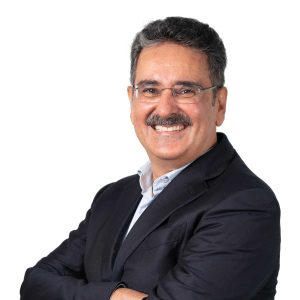
Dinshaw Irani
Helios India’s Chief Investment Officer is Dinshaw Irani. He spent more than 14 years as the Executive Director of Artemis Advisors, Helios Singapore’s exclusive research advisors, before then. Dinshaw oversaw all aspects of the research project as the CEO of Artemis Advisors, from idea generation and industry outlook to final recommendation. He established Sharekhan’s portfolio management services division while serving as their principal portfolio manager from 2003 to 2004 before joining Artemis in 2005. Prior to working at Sharekhan, Dinshaw spent more than three years as a vice president on the consumer and pharmaceutical industries’ Asian Emerging Markets team for Alliance Capital in Mumbai. Prior to Alliance, Dinshaw had positions at Lloyd Securities and Sun F&C Mutual Fund. Dinshaw likes exploring new locations so he may spend time outside in nature preserves and on hiking trails. Dinshaw possesses a post-graduate diploma in rural management from the Institute of Rural Management, Anand, and a degree in commerce with honours. Dinshaw has 28 years of combined investment experience.
View Profile →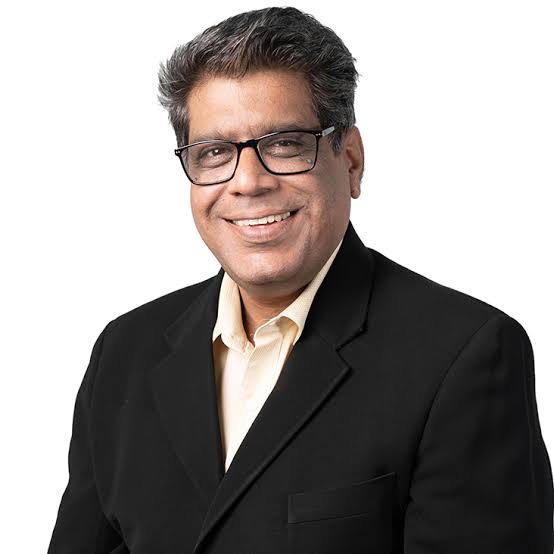
Dharmendra Grover
Dharmendra Grover is a Fund Manager (PMS & AIF) at Helios Capital Asset Management India, with extensive experience across Indian equity markets, investment research and portfolio management. His career has included roles and experience across Lloyd Securities, Credit Suisse Securities India, Tata Motors, Tata Securities, Artemis Advisors and SBI Mutual Fund, before moving into his current role at Helios Capital. This breadth of experience has given Dharmendra Grover exposure to different parts of the equity-investing ecosystem, from research and corporate environments to institutional investment management.
View Profile →
Murtuza Arsiwala
Murtuza Arsiwala is an investment professional associated with Helios Capital Asset Management India, with his current Helios team-page role listed under Trading/Dealing. He is also identified within the Fund Managers / Key Investment Team for schemes under the Helios India Alternate Fund. This makes Murtuza Arsiwala relevant to investors researching the Helios Capital AIF platform, particularly its equity-oriented strategies and the investment team involved in implementing them. His association spans the Helios India Rising Fund, Helios India Rising Fund II and Helios India Long Short Fund.
View Profile →Our Investment Experts
Our experts will understand your goals, map the right strategy across AIFs, PMS, Mutual Funds and Wealth Solutions, and guide you through every step.
Find answers to common questions about fund investments, performance, portfolio strategy, and investor services.
Helios India Rising Fund II is a closed-ended, long-only Category III AIF from Helios Capital that invests in Indian listed equities for long-term capital appreciation.
Yes. Helios India Rising Fund II is a Category III AIF under Helios India Alternate Fund.
Yes. Helios India Rising Fund II invests only on the long side and does not short stocks, unlike Helios India Long Short Fund.
No. Helios India Rising Fund II closed to fresh subscriptions on 15 September 2023.
The minimum commitment for Helios India Rising Fund II was ₹1 crore, with 25% drawn on signing and four share classes up to ₹10 crore and above.
Helios India Rising Fund II has a four-year tenure, extendable by up to two more years.
Helios India Rising Fund II has a 12-month lock-in from Final Drawdown, then quarterly exit windows with a 3% exit load up to 24 months and 1% after that.
Helios India Rising Fund II charges a 15% performance fee with no catch-up above a 10% XIRR hurdle for share classes B1 to B4.
Helios India Rising Fund II holds about 25–40 stocks: 10–15 established "good" stocks (about 50–60%) and 15–25 "emerging" stocks (about 40–50%).
Helios India Rising Fund II rejects any stock that fails on one of eight factors – theme, industry, disruption, management, governance, accounting, triggers and valuation – and buys from the rest.
Helios India Rising Fund II favours private firms taking share from state-owned ones, demographic and lifestyle change, and India's factor-cost advantage, and avoids commodities and state-owned companies.
Dinshaw Irani manages Helios India Rising Fund II, with Dharmendra Grover and Murtuza Arsiwala named as the investment team for Helios India Alternate Fund.
The main risks of Helios India Rising Fund II are equity-market, concentration, valuation and liquidity risk, its closed-ended structure, possible tenure extension and loss of capital.
Subscribe to the ALTPORT newsletter
Join HNIs, family offices and NRI investors reading with us.
You're on the list
Thanks — we've added your email to the ALTPORT newsletter.