

About Company
ICICI Prudential AMC Ltd.
Icici Prudential is a major asset management company in the country, focusing on bridging the gap between saving and investing and building long-term wealth for investors through a variety of easy and relevant investment solutions. The AMC is a joint venture between ICICI Bank and Prudential plc, one of the major financial services companies in the United Kingdom.
Fund Snapshot
| Parameter | Details |
| Strategy Name | Emerging Leaders Fund |
| Asset Manager | ICICI Prudential AMC Ltd (Alternates Division) |
| AIF Category | SEBI Registered Category III AIF |
| Investment Universe | Focuses on Nifty Midcap 100 and Nifty Smallcap 250 constituents, filtering down to high-conviction plays. |
| Portfolio Concentration | Focused, high-conviction allocation consisting of 20 to 30 stocks. |
| Minimum Investment | ₹1,00,00,000 (INR 1 Crore) as mandated by SEBI for AIF structures. |
| Fund Tenure Options | Available primarily in close-ended tranches (typically 3 to 5 years) to match small-cap business cycles. |
| Financial Health Filters | Companies must meet strict thresholds: Positive Free Cash Flow (FCF) and historical Return on Capital Employed (RoCE) > 15%. |
| Taxation Framework | Taxed at the highest marginal rate at the fund level; all distributions paid out to investors are fully tax-free. |
Investment Philosophy
ICICI Prudential AMC follows a disciplined, research-driven investment approach focused on delivering consistent, risk-adjusted returns across market cycles:
- Focus on Risk-Adjusted Returns
Core objective is to generate superior returns while managing downside risks across varying market conditions. - Blend of Quantitative & Qualitative Research
Investment decisions are driven by a mix of financial analysis, macro insights, and evaluation of management quality and governance standards. - Asset Allocation & Diversification
Strong emphasis on diversified portfolios across equity, debt, and hybrid strategies to balance growth and stability. - Fixed Income Discipline
Debt investments prioritize safety, liquidity, and optimal returns, ensuring capital protection alongside yield generation. - Robust Risk Management Framework
Independent risk oversight, continuous monitoring, and proactive measures help safeguard investor interests and manage volatility. - Long-Term Investing Approach
Encourages disciplined investing through SIPs and long-term holding to benefit from compounding and market cycles. - Investor-Centric Strategy
Product innovation and portfolio positioning are aligned with evolving investor needs, risk appetites, and market opportunities.
Listen to expert conversations and investment insights anytime on Spotify.


Learn about the experienced fund managers responsible for investment decisions, portfolio strategy, and long-term fund performance.
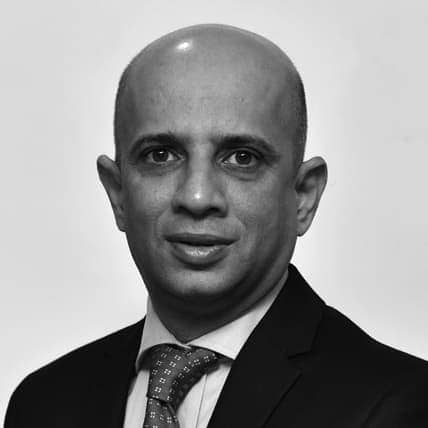
Nimesh Shah
View Profile →Our Investment Experts
Our experts will understand your goals, map the right strategy across AIFs, PMS, Mutual Funds and Wealth Solutions, and guide you through every step.
Find answers to common questions about fund investments, performance, portfolio strategy, and investor services.
The minimum 15% Return on Capital Employed threshold acts as a quantitative firewall that eliminates capital-inefficient businesses. By forcing this metric onto the mid and small-cap universe, the fund manager avoids highly leveraged corporate structures and value traps, ensuring capital is deployed only in inherently profitable businesses.
Limiting the portfolio to a maximum of 30 stocks ensures that capital is concentrated strictly in the fund manager's highest-conviction ideas rather than diluted across the index. While this concentration increases stock-specific price sensitivity, it maximizes alpha generation when an emerging business successfully scales its earnings.
A fixed multi-year tenure prevents sudden retail redemption pressures from forcing the fund manager to liquidate thinly traded mid and small-cap stocks during market panics. This locked structure gives smaller companies the necessary execution runway to construct plants, commercialize operations, and manifest projected earnings growth.
Because Category III AIF guidelines require the fund to process and clear all capital gains tax liabilities before distributing income, the reported returns are completely net of tax. Investors receive their distributions with zero further domestic tax liabilities, removing any complex capital gains tracking from personal tax filings.
The ₹1 Crore baseline investment prevents retail capital inflows and anchors the fund with an institutional-grade asset base. This stable capital pool allows the fund manager to patiently back illiquid, under-researched small-cap names and execute block deals directly with promoters without fear of daily liquidity mismatches.
Subscribe to the ALTPORT newsletter
Join HNIs, family offices and NRI investors reading with us.
You're on the list
Thanks — we've added your email to the ALTPORT newsletter.