
About Company
Helios Capital Asset Management (India) Pvt. Ltd
Helios -In Greek mythology, Helios is the God of Sun – the brightest star in the sky that has been universally worshipped as the natural source of light, energy, warmth, and nutrition on Earth since the start of time. According to mythology, Helios rode his chariot across the sky from east to west every day pulling the sun, and each night he rode back to the east, to diligently start again next morning. In addition, according to Hometic poems, Helios is described as the God who sees and hears everything and had an ethical and prophetic nature. Helios Capital is inspired by “Helios” for he has all the qualities one would seek in a good fund manager: strong purpose carried out with diligence, ability to see everything from his vantage point and an ethical and prophetic nature. Helios India is licensed by Securities & Exchange Board of India to offer Portfolio Management Services (PMS). Their flagship investment product is the Helios India Rising Portfolio.Singapore based Helios Capital Management Pte. Ltd. (“Helios”), holding a Capital Markets Services License from the Monetary Authority of Singapore, and registered as a Foreign Portfolio Investor with the Securities and Exchange Board of India. Helios, founded in 2005, currently manages both India focused long/short and long only funds/mandates and a globally focused long only fund. Founders of Helios (Dave Williams, Karan Trehan, and Samir Arora) have senior asset management experience and were pioneers in Indian asset management industry jointly setting up one of India’s first private sector AMCs in 1994 (in their prior roles). Additionally, Samir Arora has one of the longest track records (26+ years on the long side) in the Indian fund management business. He is also one of the most experienced India fund managers on the short side with a 15+ year track record.
Helios India Rising Fund
Fund Snapshot
| Name of the Scheme | Helios India Rising Fund II |
| Nature of the Scheme | Closed-ended AIF Category III |
| Fund Manager | Dinshaw Irani |
| Tenure | 4 years extendable by an additional period of up to 2 year |
| Lock-in | 12 months from the date of Final Drawdown (including interest for any delayed payment or any other amounts as may be required to be paid) |
| Liquidity Option | Investors can exit during quarterly exit windows after the lock-in period is over |
| Performance Fees | 15% without Catch-up |
| Hurdle Rate | 10% (XIRR) (only applicable for Share class B1, B2, B3 & B4 only) |
| Trustee | Amicorp Trustees India Private Limited |
| Custodian | Kotak Mahindra Bank Ltd |
| Investment Manager | Helios Capital Management India Pvt. Ltd |
HELIOS INVESTMENT PHILOSOPHY & STRATEGY
Every great investor’s philosophy is to buy high-quality firms and keep them for a long time. Practically speaking, it is harder to know what is good than what is terrible. To choose between the “cannot be rejected on any basis,” Helios only consider the “bad” along (ALL) of the 8 factors listed below.
- Good theme (size of opportunity)
- Favourable industry dynamics
- Low potential for disruption
- Strong management/background/strategy
- Good corporate governance
- Clean accounting
- Medium-term positive triggers (in most cases, projected financial performance)
- Reasonable valuations
PREFERRED THEMES: INVEST IN “NON-ZERO SUM” SITUATIONS
THEME 1
“NEW” For Private Sector / Compete With Government of India
- Since all private enterprises have the potential to succeed at the expense of government companies, India has permitted sectoral privatization without privatizing its existing government-owned companies.
- Due to superior resources, products, customer experiences, technology, etc., private-sector businesses might triumph at the expense of government-owned ones.
- Financials (Banking, Insurance), Healthcare, Education, and Infrastructure are the major sectors (rarely)
THEME 2
“New” for India / Demographic / Lifestyle Changes
- Invest in under-penetrated, even middle-class, secular themes with a “Non-zero sum” mentality since everyone can develop due to the low penetration.
- Major sectors: Air conditioning, Wealth Management and Financial Products, Mortgage, Retail, Tourism, Luxury, Vocational Education, Gaming, Liquor, Branded Goods, Work from Home, QSRs, Online, Ed-tech, etc.
- “Unorganized to Organized” is a new subtheme brought on by demonetization, the introduction of GST, and online.
THEME 3
“New” New / Factor Cost Advantage
- Capitalize on India’s “Global competitiveness.”
- “Non-zero sum” as in these sectors Indian companies do not yet compete with each other Major sectors: IT, IT Services, Contract Research, pharmaceutical, speciality chemicals
THEMES TO AVOID
COMMODITIES
Most of the time, the primary drivers of returns are global demand and pricing rather than Indian ones.
ONE BILLION CONSUMERS STORIES
- Helios are not interested in industries where the investor must use the billion-plus Indians as a source of potential since it inevitably suggests already heavily competitive industries.
- Numerous industries, including those in urban India, provide plenty of room for expansion.
STATE-OWNED COMPANIES
- Limited freedom to operate
- Investors who advocate for value in many of these firms overlook the fundamental fact that many of them are just departments of the Indian government.
BET ON INDIA, NOT ON INDIANS
In general, Helios oppose aggressive foreign expansion by Indian businesses. Far-flung investments are more challenging to handle (for management) and more challenging for us to assess.
Sector Selection Process
INDUSTRY DYNAMICS
- India connection
- Penetration
- Protected by high tariffs
- Natural monopoly/duopoly
- Capital Intensity
- Local factors or global factors
- Dependent on government policy
- Competitors/Intensity of competition
- Size of the Opportunity
- Potential for disruption
POTENTIAL FOR DISRUPTION
- New Technologies/new business models
- Disruptor or disrupted
- Competition from PE-funded companies
- Covid/work from home etc.
COMPANY MANAGEMENT/STRENGTH
- History
- Growth Discipline
- Key strengths of the company/Barriers to entry
- Capital allocation
CORPORATE GOVERNANCE
- Related party transactions
- Independent directors
- Conflicts of interest
- Options/warrants
- Suspicious price movements
FINANCIAL FORENSIC ANALYSIS:
- Long-term trends of Growth/ROCE/ROE
- Book value accretion vis a vis reported profits
- Losses are taken to the Balance Sheet
- Related party transactions
- Sell down of receivables
- Early recognition of revenues
- Trends in leverage
- Cash Flow vis a vis earnings
- R&D Capitalization
- The true cost of FX debt
- Increased trade payables to show better WC
- Shifting of expenses to later periods
Investment Objective
The AIF aims to increase capital over the long term by investing in Indian public equity. As permitted by the SEBI (Alternative Investment Funds) Regulations, 2012, the Fund will invest in securities.
Minimum Capital Commitment:
B1: >= Rs 1 cr. to < Rs 2 crs. C1: >= Rs 1 cr to < Rs 2 crs.
B2: >= Rs 2 crs. to < Rs 5 crs. C2: >= Rs 2 crs. to < Rs 5 crs.
B3: >= Rs 5 crs. to < Rs 10 crs C3: >= Rs 5 crs to < Rs 10 crs
B4: >= Rs 10 crs. and above. C4: >= Rs 10 crs. and above
Initial Contribution & Drawdown
In Drawdowns or Lump Sum of Minimum Capital Commitment of INR 1 Cr. A capital contribution made by the Contributors to the plan in response to the delivery of a drawdown notification is referred to as a drawdown. The first drawdown will be for 25% of the corresponding capital commitment and must be paid at the same time as the contribution agreement is signed. The remaining amount, whenever it is needed within the commitment period.
Exit Load
- <=12 months Lock-in
- >12 months and <=24 months 3% of Exit Proceeds
- >24 months 1% of Exit Proceeds
Frequency of NAV dissemination
Daily NAV computation is required. The Investment Manager must, however, only provide the NAV once per quarter.
Unique Feature
- 25-year actual track record of India’s investments (and not back-tested models or paper portfolios)
- The staff oversees and advises the FII Fund (with first-hand knowledge of FII flows, behaviour, etc.).
- Long-only and long/short strategies are managed and advised by the same staff (Shorts provide yet another perspective)
- Several team members also oversee and provide advice for an international fund (so Helios have experience with developments in other major markets)
- Senior team members have worked together for 15 to 20 years and are knowledgeable on how to handle different market stages (that invariably come up)
MEDIUM-TERM TRIGGERS
Good outcomes and the restart of growth are triggers that might lead to an increase in confidence for the future. External triggers include anticipated government policies, legal proceedings, clarification of open questions, M&A, restructuring, management changes, etc. Helios occasionally employ anticipated medium-term triggers to look for equities that might profit from the occurrence. Even then, Helios anticipate holding the stock most of the time past the trigger point. Medium-term triggers (events) may occasionally be utilized to postpone rendering a final judgement on the stock.
VALUATION PROCESS
High confidence in reasonable returns:
- This group consists of premium businesses that continuously outperform the market and have strong competitive advantages (moats).
- Although Helios do not anticipate these firms to be upgraded (any further), Helios are pleased with their projected development over the coming years.
- Even if growth is unaffected, Helios sell these equities if values become too high and are in danger.
Reasonable confidence in high returns:
- Helios have a portfolio of businesses where Helios anticipate greater returns due to rapid development and possible corporate revaluation.
WHAT STOCKS TO BUY?
- The existence of even ONE of the following criteria typically makes a stock perform poorly:
- Bad theme (size of opportunity)
- Unfavourable industry dynamics
- Potential for disruption
- Chins/weakness in management/background/strategy
- Poor corporate governance
- Low-quality accounting
- Negative medium-term triggers (in most cases, projected financial performance)
- Unreasonably high valuations
- Eliminating the bad greatly enhances the likelihood of finding the good and lowers the cost of errors.
- Helios create our portfolio of good firms and “developing” good companies from the pool of stocks that “cannot be rejected on any factor.”
HOW MANY STOCKS TO OWN AT A TIME?
A robust portfolio needs to have 2 kinds of stocks.
“Good” Stocks: Offer “High Confidence in reasonable returns” (10 to 15 stocks, ~50 to 60% weight)
- This group comprises better calibre, consistently performing businesses with distinct advantages, large opportunities, and strong profit visibility.
- Helios are pleased with these firms’ anticipated success over the coming years but do not anticipate these companies to be (further) re-rated.
- If values get too high or if there are significant developments that force us to reevaluate the firm, Helios sell these stocks.
- Expected long-term compounded returns exceed the market benchmark by 3 to 5% annually.
“Emerging” good stocks: Offer “Reasonable confidence in high returns” (15 to 25 stocks, ~40 to 50% weight)
- A collection of businesses where Helios anticipate greater profits due to the combination of early stock discovery (or re-discovery) and increased valuation of the business if it lives up to its potential
- When Helios perceive a catalyst for a prolonged recovery or re-discovery by the market, some of these stocks may be large-cap firms and mid-size ones.
- Expected medium-term compounded returns exceed the market benchmark by 5 to 10% each year.
TIME HORIZON: HOW LONG TERM A VIEW IN (INITIALLY) CHOOSING STOCKS?
- Long-term is a series of “1 to 3 years” short term.
- One may more clearly envision industry trends, disruption, corporate strengths and strategies, government regulations, existing management, market preferences, external environment, etc., across a 1 to the 3-year investment horizon. There is no need to stop holding the same stocks for another one to three years, and so on, if the firm is doing well.
- Longer-term winners typically surprise their managements, themselves, and their investors with their growth/success and cannot, as a result, be widely and confidently predicted far in advance. Helios have continuously owned many long-term winners in our market by purchasing stocks after screening them using our 8 criteria.
WHEN TO SELL?
- Long-term does not mean “Buy and Forget.”
- Helios purchase equities with an initial time horizon of one to three years, but the long term comprises many shorter horizons. This means that even while Helios keep most stocks for a respectable amount of time, Helios continually assess them to ensure that our original stock-related premise is still valid.
Stock may be sold for company-specific fundamentals, valuation reasons or risk control reasons:
- Stocks are often sold at zero if fundamentals worsen, or something unexpectedly unfavourable happens.
- Stock weight may be reduced or sold entirely if stock returns dramatically surpass underlying earnings growth over a lengthy period.
- High prices may be okay for excellent firms up to a point, but Helios don’t support the “Buy/Hold at all valuations” philosophy.
Listen to expert conversations and investment insights anytime on Spotify.
Track how the fund has performed against its benchmark over time through a comparative line graph analysis.
Helios India Rising Portfolio
Benchmark: BSE 500 TRI
Compare fund returns and benchmark performance across multiple investment periods using a visual bar graph.
Review and compare fund returns against benchmark performance across different investment periods in a detailed tabular format.
Helios Capital Asset Management (India) Pvt. Ltd
| AUM(Cr.) | 1M | 3M | 6M | 1Y | 2Y | 3Y | 4Y | 5Y | Ince. | |
| Performance | ₹1566.43 | 0.02 | 6.92 | 5.63 | 4.60 | 3.68 | 14.51 | 15.91 | 12.90 | 19.56 |
| Benchmark | NA | 2.19 | 3.78 | 1.99 | 2.98 | 0.42 | 11.89 | 13.25 | 12.35 | 19.22 |
Learn about the experienced fund managers responsible for investment decisions, portfolio strategy, and long-term fund performance.
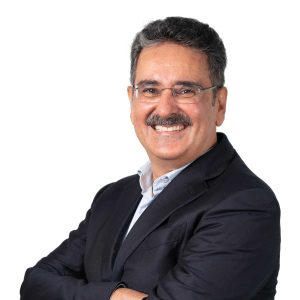
Dinshaw Irani
Helios India’s Chief Investment Officer is Dinshaw Irani. He spent more than 14 years as the Executive Director of Artemis Advisors, Helios Singapore’s exclusive research advisors, before then. Dinshaw oversaw all aspects of the research project as the CEO of Artemis Advisors, from idea generation and industry outlook to final recommendation. He established Sharekhan’s portfolio management services division while serving as their principal portfolio manager from 2003 to 2004 before joining Artemis in 2005. Prior to working at Sharekhan, Dinshaw spent more than three years as a vice president on the consumer and pharmaceutical industries’ Asian Emerging Markets team for Alliance Capital in Mumbai. Prior to Alliance, Dinshaw had positions at Lloyd Securities and Sun F&C Mutual Fund. Dinshaw likes exploring new locations so he may spend time outside in nature preserves and on hiking trails. Dinshaw possesses a post-graduate diploma in rural management from the Institute of Rural Management, Anand, and a degree in commerce with honours. Dinshaw has 28 years of combined investment experience.
View Profile →Our Investment Experts
Our experts will understand your goals, map the right strategy across AIFs, PMS, Mutual Funds and Wealth Solutions, and guide you through every step.
Subscribe to the ALTPORT newsletter
Join HNIs, family offices and NRI investors reading with us.
You're on the list
Thanks — we've added your email to the ALTPORT newsletter.