

About Company
Phillip Capital India
PhillipCapital India, headquartered in Mumbai, is a diversified financial intermediary that provides brokerage services in cash and derivatives (equities, commodities, and currencies), as well as Advisory Services, Distribution of IPOs/ Mutual Funds/ Insurance, Research Services, Demat services, Clearing Services, Portfolio Management Services (PMS), and Merchant Banking Services to corporates, foreign and domestic institutions, and high net worth individuals (HNI). PhillipCapital (India) P. Ltd. is a subsidiary of the Singapore-based PhillipCapital Group.’ The National Stock Exchange (NSE), the Bombay Stock Exchange (BSE), the Metropolitan Stock Exchange (MSEI), the Multi Commodity Exchange (MCX), and the National Commodity and Derivatives Exchange Ltd all have us as members (NCDEX). We also participate in the Central Depository Services Limited (CDSL) and National Securities Depository Limited (NSDL) depository systems (NSDL).
Phillip Ethical India Portfolio
The Phillip Ethical India Portfolio represents a specialized investment vehicle within the Indian Portfolio Management Services (PMS) landscape, designed specifically for investors who prioritize moral and social alignment alongside financial growth. Managed by Nishit Shah, this portfolio follows a disciplined Shariah-compliant framework, ensuring that every constituent company adheres to strict ethical, social, and financial parameters. Since its inception, the strategy has carved a niche by bridging the gap between faith-based values and modern equity compounding, targeting a concentrated selection of approximately 20 to 25 stocks.
Fund Snapshot
| Year of Inception | 207 |
| Number of Stocks | Around 20 |
| Investment Horizon | Medium to Long Term |
| Fund Managers | Nishit Shah |
Investment Philosophy
Phillip Capital Ethical India Portfolio follows the Multicap stock investment strategy based on Shariah compliance. It invests in a diversified portfolio of stocks across different capitalisations. The investment team of Phillip Capital Ethical India portfolio has subscribed to renowned Shariah scholars across the world to make a list of investment pics. After which, using multiple steps, they have concluded to around 25 stocks that can be a part of the Phillip Ethical India Portfolio. It’s benchmark is the Nifty500 Shariah index.
The Core Philosophy: Shariah-Compliant Investing
At the heart of the Phillip Ethical India Portfolio is a commitment to "Halal" investing. This process is not merely a qualitative filter but a rigorous, multi-stage screening mechanism. To ensure global standards of compliance, the investment team at PhillipCapital subscribes to the guidance of renowned Shariah scholars worldwide. This scholarly oversight ensures that the portfolio remains dynamic and strictly adheres to the evolving interpretations of ethical finance.
The investment universe is primarily defined by the Nifty 500 Shariah Index. However, the fund manager employs an active, multicap approach to select the "best of the best" from this universe, looking for companies that demonstrate strong fundamentals and sustainable growth trajectories across large, mid, and small-cap segments.
The Multi-Step Screening Process
The path for a stock to enter this portfolio involves two primary layers of filtration:
-
Sectoral (Business) Screening: The portfolio strictly excludes industries that are deemed socially or morally detrimental. This includes businesses involved in conventional financial services (interest-based banking and insurance), alcohol, tobacco, gambling, adult entertainment, and non-halal food products. By removing these sectors, the portfolio naturally gravitates toward "productive" sectors of the economy such as Manufacturing, Technology, Healthcare, and Consumer Goods.
-
Financial Ratio Screening: Shariah compliance also mandates financial discipline. Companies are screened for their debt levels, interest income, and cash equivalents. Typically, a company must have a debt-to-equity ratio and interest-earning assets below specific thresholds (often 33%) to qualify. This focus on "low-leverage" companies often provides an unintended but welcome "Quality" bias, as the portfolio consists of businesses with strong balance sheets and internal accruals.
Unique Feature: Socially Responsible Investing (SRI)
Beyond the technicalities of Shariah law, the Phillip Ethical India Portfolio functions as a Socially Responsible Investment (SRI) vehicle. By avoiding "sin stocks" and highly leveraged firms, the portfolio aligns with the broader global trend of Environmental, Social, and Governance (ESG) investing. These socially responsible companies tend to have better corporate governance and are less susceptible to the systemic risks associated with high debt or controversial business practices.
The strategy is designed for a medium to long-term investment horizon, allowing the underlying businesses to benefit from India's structural growth themes. Because the portfolio is market-cap agnostic, Nishit Shah has the flexibility to move into high-growth mid-caps when the economic cycle is favorable or retreat to the safety of large-cap secular compounders during times of volatility.
Strategic Differentiation
The Phillip Ethical India Portfolio offers a unique diversification benefit. Because it excludes the traditional Banking and Financial Services (BFSI) sector—which typically commands a massive weight in standard Indian indices—this portfolio often moves independently of the broader Nifty 50. For an investor already heavily exposed to banks through other mutual funds, this provides a "true" diversification into the real economy, focusing on the engines of innovation and production that drive India’s long-term future.
Listen to expert conversations and investment insights anytime on Spotify.

Track how the fund has performed against its benchmark over time through a comparative line graph analysis.
Phillip Ethical India Portfolio
Benchmark: BSE 500 TRI
Compare fund returns and benchmark performance across multiple investment periods using a visual bar graph.
Review and compare fund returns against benchmark performance across different investment periods in a detailed tabular format.
Phillipcapital (India) Pvt Ltd
| AUM(Cr.) | 1M | 3M | 6M | 1Y | 2Y | 3Y | 4Y | 5Y | Ince. | |
| Performance | ₹10.74 | 3.05 | 9.30 | 16.92 | 10.56 | -0.35 | 6.67 | 8.09 | 7.52 | 10.85 |
| Benchmark | NA | -0.09 | 3.84 | 1.42 | 4.70 | -0.68 | 11.22 | 10.88 | 9.77 | 11.39 |
Learn about the experienced fund managers responsible for investment decisions, portfolio strategy, and long-term fund performance.
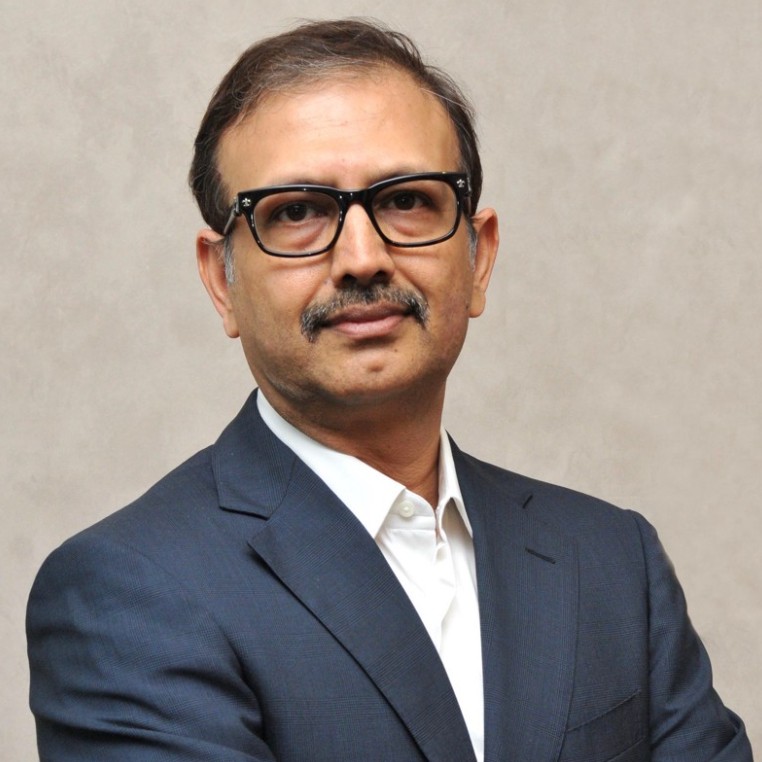
Vineet Bhatnagar
Vineet Bhatnagar is the prominent face of PhillipCapital India, having led the firm's strategic expansion for over a decade. He is widely recognized in the Indian financial markets for his deep expertise in institutional equities, commodities, and derivatives. Under his leadership, the firm has transitioned into a multi-asset financial intermediary, known for its strong focus on research and "high-touch" client services. He is a frequent commentator on major business news channels regarding market outlooks and sectoral shifts.
View Profile →Our Investment Experts
Our experts will understand your goals, map the right strategy across AIFs, PMS, Mutual Funds and Wealth Solutions, and guide you through every step.
Find answers to common questions about fund investments, performance, portfolio strategy, and investor services.
The strategy compensates for the absence of the BFSI sector by over-weighting sectors like Information Technology, Pharmaceuticals, Chemicals, and Consumer Discretionary which often show higher capital efficiency and lower debt. This creates a distinct performance profile that relies on industrial growth and technological innovation rather than credit cycles.
PhillipCapital utilizes the services of professional Shariah advisory boards and specialized screening providers who conduct periodic audits of the constituent companies' financial statements and business activities. If a company's debt levels rise above the permitted threshold or its business nature changes, it is systematically removed from the portfolio during the rebalancing process.
The Nifty 500 Shariah Index serves as a relevant yardstick because it contains all the Shariah-compliant stocks from the broader Nifty 500 universe. By benchmarking against this, the fund manager can demonstrate how much "alpha" or outperformance the active selection of 20 to 25 stocks is generating compared to a passive basket of ethical stocks.
In Shariah-compliant investing, there is a process known as "purification" where any small, incidental interest income earned by a portfolio company—despite its primary business being halal—is identified. Investors are typically advised on the percentage of dividends that should be donated to charity to "purify" their investment returns, ensuring total alignment with ethical standards.
Subscribe to the ALTPORT newsletter
Join HNIs, family offices and NRI investors reading with us.
You're on the list
Thanks — we've added your email to the ALTPORT newsletter.