

About Company
Bajaj Finserv Asset Management Limited
Bajaj Finserv Asset Management Limited (Bajaj AMC), a wholly-owned subsidiary of Bajaj Finserv Limited, launched its operations in 2023 after receiving SEBI approval. Headquartered in Pune, the company has rapidly scaled its presence in the Indian mutual fund industry, crossing ₹17,400 crore in assets under management by late 2024. Led by CEO Ganesh Mohan and CIO Nimesh Chandan, the AMC leverages the vast distribution network of the Bajaj Group. Its product suite spans equity, debt, and hybrid funds, characterized by a data-driven, behavioral approach to investing that seeks to deliver consistent, risk-adjusted growth for a diverse retail and institutional investor base.
Bajaj Finserv Asset Management Limited (Bajaj AMC) bases its investment philosophy on a proprietary framework called InQuBe. This approach is designed to blend traditional fundamental analysis with modern data science and psychology to uncover market opportunities.
The InQuBe Philosophy
The name InQuBe represents the synergy of three distinct "edges" the firm seeks to gain over the market:
-
Informational Edge (In):
-
Focuses on deep fundamental research to identify business strengths that the broader market might have overlooked.
-
Believes that long-term wealth is created by focusing on quality and management.
-
-
Quantitative Edge (Qu):
-
Utilizes data-driven models and analytics to identify patterns and remove human emotional bias from the initial screening process.
-
Involves rigorous stress testing and risk-adjusted return evaluations.
-
-
Behavioural Edge (Be):
-
This is a core differentiator for Bajaj AMC. It acknowledges that markets are often irrational due to human emotions (fear and greed).
-
The firm seeks to exploit situations where securities are mispriced due to behavioral factors, such as overreaction to short-term news.
-
Asset-Specific Strategies
-
Equity: The firm prioritizes long-term growth and "Megatrend Investing"—identifying large-scale, structural shifts in the economy rather than chasing short-term market cycles. They aim to buy companies at prices below their "true worth" (intrinsic value).
-
Fixed Income: The philosophy centers on Quality and Liquidity. They create an investment universe of borrowers with strong repayment capacity and conduct regular stress tests to ensure the portfolio can withstand market volatility.
Key Investment Principles
-
Alpha Generation: A commitment to delivering returns above benchmarks without taking disproportionate risks.
-
Risk-Adjusted Returns: Every investment is viewed through the lens of the risk taken to achieve the return, rather than just chasing the highest absolute number.
-
Megatrend Focus: Investing in structural trends (like digitalization or shifting consumer habits) for sustainable growth.
Listen to expert conversations and investment insights anytime on Spotify.

Watch our podcast episodes featuring expert interviews, market insights, investment strategies, and in-depth discussions on the latest financial trends.

Learn about the experienced fund managers responsible for investment decisions, portfolio strategy, and long-term fund performance.
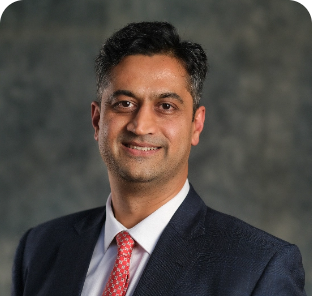
Ganesh Mohan
Ganesh Mohan is the Managing Director and CEO of Bajaj Finserv Asset Management, where he leads the company's strategic entry into the investment solutions space. An alumnus of IIT Kharagpur and IIM Calcutta, he joined the Bajaj Group in 2015 as the Group Head of Strategy, overseeing critical transformational projects and innovation initiatives. Before his tenure at Bajaj, Mohan spent 16 years as a Partner at the Boston Consulting Group, advising global clients across the US, Europe, and India. His leadership philosophy emphasizes strategic foresight and robust organizational frameworks, aimed at delivering innovative, behavioral-finance-led investment products for long-term growth.
View Profile →Our Investment Experts
Our experts will understand your goals, map the right strategy across AIFs, PMS, Mutual Funds and Wealth Solutions, and guide you through every step.
Subscribe to the ALTPORT newsletter
Join HNIs, family offices and NRI investors reading with us.
You're on the list
Thanks — we've added your email to the ALTPORT newsletter.