

About Company
Singularity AMC LLP
Singularity AMC LLP is an investment management platform focused on growth-oriented businesses across private and public markets. Its approach combines sector research, investment expertise and operational perspectives to support companies as they scale. The platform’s three principal offerings are Growth Private Equity, Strategic Autonomy and Public Equity (PIPE).
Singularity Fund of Funds AIF
Singularity Fund of Funds AIF provides a route to private-market investing through a combination of private equity funds, venture capital funds, secondary investments and direct co-investments. Instead of relying on a single portfolio of companies, a fund-of-funds strategy allocates capital across underlying investment funds and selected private-market opportunities.
The strategy focuses on fund manager selection, access to established private-market businesses, portfolio diversification and opportunities to acquire existing fund interests at attractive valuations. Its approach combines primary commitments to PE/VC funds with secondaries and co-investments intended to provide additional flexibility in portfolio construction.
Singularity Fund of Funds AIF: Key Details
| Parameter | Details |
| Fund name | Singularity Fund of Funds AIF |
| Category | Category II AIF |
| Investment manager platform | Singularity AMC LLP |
| Fund managers listed | Yash Kela and Madhu Kela |
| Target fund size | ₹400 crore |
| Green-shoe option | ₹100 crore |
| Total potential fund size | ₹500 crore |
| Primary fund allocation | Approximately 40–50% |
| Co-investments and secondaries | Up to 60% |
| Fund tenure | 10 years, extendable by 1+1 years |
| Placement fee | Up to 2% |
| Annual management fee | 2% per annum |
| Performance fee | 20%, with catch-up |
| Hurdle rate | 10% per annum, pre-tax |
| Initial drawdown | 20% |
| Subsequent drawdowns | 10–20% every 4–6 months |
| Sponsor commitment | ₹60 crore |
| Primary investment cheque size | ₹10 crore–₹60 crore |
| Co-investment and secondary cheque size | ₹20 crore–₹70 crore |
What Is Singularity Fund of Funds AIF?
Singularity Fund of Funds AIF is structured as a Category II Alternative Investment Fund (AIF) with a private equity and venture capital fund-of-funds approach. It seeks exposure to private-market opportunities through investments in underlying funds, existing fund interests and selected companies.
A traditional private equity fund generally invests directly in companies. A private equity fund of funds, by contrast, invests primarily in other investment funds managed by specialist teams. This creates exposure to different managers, investment stages, sectors and fund vintages through a single investment vehicle.
The Singularity approach combines primary commitments to selected VC/PE funds with secondary transactions and co-investments. Its stated target fund size is ₹400 crore, with an additional ₹100 crore green-shoe option.
The strategy is designed for investors who can accept a long investment horizon and limited liquidity in exchange for access to private-market opportunities. The fund's 10-year tenure, which may be extended by two additional one-year periods, makes it important to assess capital availability before investing.
Singularity Fund of Funds AIF is part of the wider Singularity AMC LLP alternatives platform.
Singularity Fund of Funds Investment Strategy
The Singularity Fund of Funds investment strategy combines three principal routes to private-market exposure: primary fund investments, secondary investments and co-investments.
Primary investments in VC and PE funds
Approximately 40–50% of the portfolio is intended for primary investments. The fund seeks established private equity and venture capital managers with relevant experience, a clear investment thesis and a track record of investing in businesses with growth potential.
The selection framework considers:
- Fund manager experience, network and investment history.
- The fund's investment thesis and sector focus.
- The quality of companies in the underlying portfolio.
- Fund vintage and expected investment horizon.
- Portfolio diversification across industries, stages and vintage years.
- Access to managers and opportunities that may otherwise be difficult to reach.
The stated primary investment cheque size is ₹10 crore–₹60 crore. The strategy includes specialist sector funds, follow-on or continuation funds, and funds incubated by Singularity.
Secondary investments
Secondary transactions allow the fund to purchase existing interests in private equity or venture capital funds, or exposure to individual companies held by those funds. Such transactions may offer greater visibility into underlying assets than a conventional blind-pool commitment.
Co-investments and direct opportunities
The fund may invest directly in companies alongside underlying fund managers or participate in selected businesses within an existing portfolio. Its stated co-investment and secondary allocation can reach 60%, with cheque sizes of ₹20 crore–₹70 crore and a typical stated holding period of three to five years.
These allocations are strategic guidelines, not a guarantee of the final portfolio mix. Actual investments depend on available opportunities, transaction pricing and investment decisions.
How Does Singularity Fund of Funds Select Underlying Funds?
Fund manager selection is central to a fund-of-funds AIF because the performance of the underlying managers can materially affect the investor's overall outcome.
Singularity's stated framework considers a manager's investment thesis, professional network, track record, portfolio companies and potential synergies with the broader platform. It also favours appropriately sized funds where capital allocation may be more meaningful and the manager's strategy remains focused.
Vintage diversification is another consideration. Funds launched in different market environments may encounter different entry valuations, financing conditions and exit opportunities. Spreading commitments across vintages can reduce dependence on a single investment cycle, although it cannot eliminate private-market risk.
The strategy also considers specialist managers and funds incubated around selected sectors. These may provide access to focused investment opportunities that differ from broader multi-sector PE/VC funds.
Due diligence remains important at both levels: assessing the underlying fund manager and evaluating the companies in which that manager invests. Fund fees, governance, portfolio concentration, follow-on funding requirements and expected exit timelines can all influence the ultimate net outcome.
How Do Secondary Investments Work in Singularity Fund of Funds?
Secondary investments involve purchasing existing interests from investors who already hold stakes in a private equity or venture capital fund. They may also involve acquiring an interest in an individual company held by a fund.
For example, a limited partner (LP) may sell its interest in a fund before the underlying investments have fully exited. A buyer can acquire that interest at a negotiated price, gaining exposure to the existing portfolio and its remaining investment life.
The Singularity secondaries fund strategy focuses on mature, established funds and companies where the underlying assets may be closer to a liquidity event. The investment framework identifies potential discounts of 25% or more to prevailing NAV or estimated value in selected transactions.
Potential advantages include:
- Greater visibility into existing portfolio companies.
- Access to underlying assets without relying entirely on new fund commitments.
- Opportunities to negotiate a discount to estimated value.
- Potentially shorter holding periods than those associated with new primary fund commitments.
- Earlier distributions if underlying companies or funds complete exits.
A discount does not automatically make a transaction attractive. The quality of the underlying assets, valuation methodology, remaining liabilities and realistic exit prospects must all be assessed. Secondary investments may shorten the J-curve, but they do not eliminate it or guarantee faster distributions.
Singularity Fund of Funds Co-Investment Strategy
Co-investments allow a fund to invest directly in a company alongside a private equity or venture capital manager. The underlying manager typically leads the transaction, while the co-investor participates under the agreed investment terms.
Singularity's approach includes direct investments in selected companies, co-investments in promising businesses held by underlying funds and potential pre-IPO opportunities. The stated focus is on established businesses where the company and its business model have already developed beyond the earliest stages.
Co-investments can provide more targeted exposure to selected companies and may reduce reliance on fund commitments alone. However, they introduce direct company-level risks, including valuation uncertainty, governance concerns, business execution and exit timing.
The stated cheque size for co-investments and secondary transactions is ₹20 crore–₹70 crore. Investment availability and terms will vary by transaction.
Singularity Fund of Funds Allocation, Tenure and Drawdowns
The stated portfolio framework allocates approximately 40–50% to primary investments and up to 60% to secondaries and co-investments. Primary fund investments may have holding periods of seven to ten years, while secondary and co-investment positions are described with a typical holding period of three to five years.
The overall fund tenure is 10 years, extendable by one year and then by a further year. This is a long-term commitment and should not be confused with the expected holding period of an individual portfolio investment.
The stated drawdown schedule is:
- Initial drawdown: 20%.
- Subsequent drawdowns: 10–20% every four to six months.
Capital commitments may be called in stages rather than collected in full at the beginning. Investors should retain sufficient liquidity to meet capital calls when due.
The investment framework also describes exits beginning from around the fourth year and a peak cash outflow of approximately 65% of commitment. These are strategy-level planning assumptions, not assured cash-flow schedules for every investor.
Singularity Fund of Funds Fees and Carry
The listed commercial terms include a placement fee of up to 2%, an annual management fee of 2% and a performance fee of 20% with a catch-up mechanism. The stated hurdle rate is 10% per annum, pre-tax.
| Fee component | Stated term |
| Placement fee | Up to 2% |
| Annual management fee | 2% per annum |
| Performance fee / carry | 20% with catch-up |
| Hurdle rate | 10% per annum, pre-tax |
| Sponsor commitment | ₹60 crore |
The hurdle rate is a threshold used in calculating performance-linked compensation under the applicable fee waterfall. It should not be interpreted as a guaranteed return to investors.
The strategy also describes a no-double-dip fee approach, intended to avoid an additional layer of management fees and carry on underlying fund investments. Investors should review the governing documents to understand how underlying fund expenses, transaction costs and performance fees affect the final net return.
Singularity Fund of Funds Manager and Investment Team
The fund page lists Yash Kela and Madhu Kela as fund managers.
Yash Kela is the founder and Chief Investment Officer at Singularity. His investment focus includes identifying growth opportunities as India's economy expands, with exposure to themes across financial services, retail and fast-moving consumer goods.
Madhu Kela is an established Indian public-market investor with more than three decades of investment experience. He previously served as Chief Investment Strategist at Reliance Capital and was involved in managing public-market investments.
For a fund-of-funds strategy, the team's role extends beyond selecting companies. It includes evaluating external managers, assessing fund vintages, negotiating secondary transactions, monitoring underlying portfolios and deciding when to allocate capital to co-investments.
The quality of these decisions can materially affect diversification, capital deployment and the timing of distributions.
Singularity Fund of Funds Risks and Liquidity Considerations
A private equity fund of funds carries risks at both the underlying fund and individual company levels.
- Underlying manager risk: Poor investment selection or execution by an underlying manager can affect the overall portfolio.
- Valuation risk: Private-market NAVs may differ from the prices ultimately realised in a sale or listing.
- Illiquidity: Investors may be unable to exit on demand during the fund tenure.
- J-curve risk: Investments and expenses may precede distributions, creating an initial period of negative returns.
- Concentration risk: Diversification across funds does not remove exposure to common sectors, economic conditions or financing markets.
- Fee drag: Fees at the fund and underlying investment levels can reduce net returns.
- Exit risk: Public listings, acquisitions and other liquidity events may be delayed or may not occur.
- Capital-call risk: Investors must meet drawdowns in accordance with the fund documents.
Private market diversification can broaden exposure, but it does not guarantee lower losses or superior returns. Investors should evaluate the full investment horizon, fee structure and liquidity requirements before making a commitment.
How to Invest in Singularity Fund of Funds Through ALTPORT
Investors can explore the Singularity Fund of Funds AIF listing on ALTPORT to understand the strategy and its stated terms.
Before investing, review the scheme documents, eligibility criteria, minimum commitment, drawdown schedule, fee waterfall, tenure and exit provisions. The minimum investment amount should be taken from the applicable offering documents rather than inferred from the fund's cheque sizes for underlying investments.
Investors can also explore Category II AIF options and the broader range of Alternative Investment Funds available through ALTPORT. The Singularity platform also includes direct growth private equity through the Singularity Growth Opportunities Fund and another Category II strategy, the Singularity Green Fund.
Listen to expert conversations and investment insights anytime on Spotify.

Watch our podcast episodes featuring expert interviews, market insights, investment strategies, and in-depth discussions on the latest financial trends.

Learn about the experienced fund managers responsible for investment decisions, portfolio strategy, and long-term fund performance.

Yash Kela
Yash Kela is an investor and entrepreneur with experience in private equity, venture capital and public-market investments. He is the Founder and Chief Investment Officer (CIO) at Singularity, a platform he established in 2015 to participate in investment opportunities across private and public markets. His work focuses on identifying growth-stage businesses, collaborating with founders and supporting companies as they expand.
View Profile →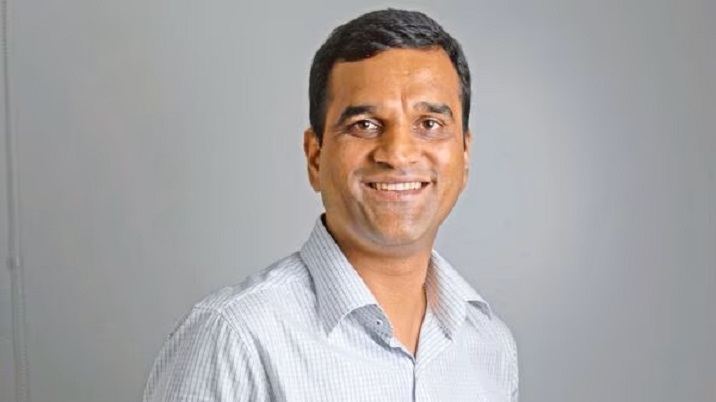
Madhu Kela
Madhu Kela is a prominent public market investor in India, having invested public funds for over three decades. Previously, he served as the Chief Investment Strategist at Reliance Capital, a leading asset management company in India, where he oversaw a flagship scheme that achieved a CAGR of 28%, significantly outperforming the S&P BSE 100 benchmark, which recorded a 15% CAGR, marking it as one of the most successful in India’s investment history.
View Profile →Our Investment Experts
Our experts will understand your goals, map the right strategy across AIFs, PMS, Mutual Funds and Wealth Solutions, and guide you through every step.
Find answers to common questions about fund investments, performance, portfolio strategy, and investor services.
Singularity Fund of Funds AIF is a Category II AIF strategy that combines investments in private equity and venture capital funds with secondary transactions and selected direct co-investments.
Yes. The fund is presented as a Category II AIF.
What does a Singularity fund of funds invest in?
Yes. Primary commitments to private equity funds form part of the strategy, alongside venture capital funds and other private-market opportunities.
Yes. The stated strategy includes venture capital funds selected on factors such as manager quality, investment thesis, track record and portfolio composition.
Secondary investments involve purchasing existing interests in a private equity or venture capital fund, or interests in individual companies held by a fund. They may provide exposure to established assets and potential discounts to estimated value.
Yes. The strategy includes direct company investments and co-investments alongside underlying fund managers, including selected opportunities in established businesses.
A minimum investor commitment is not specified in the key commercial terms presented here. Investors should refer to the applicable scheme documents for the required subscription amount.
The stated terms include a placement fee of up to 2%, an annual management fee of 2% and a 20% performance fee with catch-up, subject to a 10% per annum pre-tax hurdle rate.
The stated tenure is 10 years, with extensions of one year plus a further one year.
Key risks include underlying manager performance, valuation uncertainty, illiquidity, fee drag, capital calls, concentration and delayed or unsuccessful exits. Investors can lose capital.
The fund-of-funds listing describes the same core strategy and commercial terms presented for Singularity Fund of Funds II, including the ₹400 crore target size plus a ₹100 crore green-shoe option, similar allocation ranges, a 10-year tenure and comparable fee terms. The two names should not be treated as separate investment opportunities without a clear distinction in the applicable legal scheme documents.
Subscribe to the ALTPORT newsletter
Join HNIs, family offices and NRI investors reading with us.
You're on the list
Thanks — we've added your email to the ALTPORT newsletter.