

About Company
EAAA India Alternatives
EAAA India Alternatives Limited is an alternative asset management platform in India focused primarily on Private Credit and Real Assets. The company was formerly known as Edelweiss Alternative Asset Advisors Limited and has been active in India's alternatives market for more than 17 years. Its business is focused on identifying private-market opportunities and creating investment solutions for domestic and global investors.
What Is Edelweiss Special Opportunities Fund?
Edelweiss Special Opportunities Fund is a Category II AIF series focused on performing credit and structured private credit opportunities. The fourth vehicle, Edelweiss Special Opportunities Fund IV (ESOF IV), was launched in December 2025 and is designed to provide medium- to long-term financing to Indian corporates and sponsors.
Unlike a distressed-credit strategy that primarily seeks opportunities in businesses already facing severe financial stress, performing credit generally focuses on borrowers that continue to meet their repayment obligations but may require flexible or customised financing. The underlying credit may be structured around business expansion, acquisitions, refinancing, stake consolidation or other strategic requirements.
ESOF IV is targeting a ₹13,500 crore corpus, equivalent to approximately US$1.5 billion, comprising a US$1 billion target corpus and a US$500 million greenshoe option. The seven-year fund is designed to build a portfolio of approximately 15–17 investments, with an indicative average transaction size of ₹450–500 crore. These are fund-level targets rather than guaranteed deployment or return outcomes.
For investors exploring Category II AIFs, ESOF IV represents a private-credit approach centred on underwriting the borrower, its cash flows and the collateral or security supporting the financing.
Edelweiss Special Opportunities Fund IV Details: Snapshot and Key Terms
| Particular | ESOF IV Details |
| Fund name | Edelweiss Special Opportunities Fund IV |
| Short name | ESOF IV |
| Category | Category II AIF |
| Managing entity | EAAA India Alternatives Limited |
| AIF registration | IN/AIF2/24-25/1745 |
| Fund structure | Close-ended Category II AIF |
| Launch | December 2025 |
| Strategy | Performing credit / structured private credit |
| Target corpus | US$1 billion |
| Greenshoe | US$500 million |
| Total target including greenshoe | US$1.5 billion, approximately ₹13,500 crore |
| Fund tenure | 7 years |
| Target portfolio | Approximately 15–17 investments |
| Indicative average investment size | ₹450–500 crore |
| Target sectors | Industrial products, manufacturing, automobiles, chemicals, pharmaceuticals and other eligible opportunities |
| Investment approach | Flexible financing to Indian corporates and sponsors |
| Underwriting framework | Counterparty, cash flows and collateral |
| Minimum commitment | Not established from the reviewed primary sources — refer to latest fund documents. |
| Fees | Not established from the reviewed primary sources — refer to latest fund documents. |
| Performance allocation | Not established from the reviewed primary sources — refer to latest fund documents. |
| Drawdown schedule | As specified in the latest fund documents |
| Current subscription status | ESOF IV was launched in December 2025 and fundraising was underway as of February 2026; confirm current availability before investing. |
| Current commitments raised | Not established from the reviewed primary sources — refer to latest fund documents. |
The ₹13,500 crore target is a target corpus and should not be interpreted as capital already raised. Similarly, the proposed portfolio size and average transaction size represent the stated investment plan and can change as the fund evaluates opportunities.
The fund's legal and regulatory records identify ESOF IV Onshore Fund as an active Alternative Investment Fund managed by EAAA India Alternatives Limited.
Edelweiss Special Opportunities Fund Investment Strategy: Performing Credit, Explained
The central idea behind the Edelweiss performing credit fund strategy is to provide customised financing to established businesses where conventional bank financing may not adequately address the requirement.
ESOF IV is intended to focus on medium- to long-term investments and may provide flexible financing for situations such as:
- Business expansion
- Acquisitions
- Refinancing
- Stake consolidation
- Strategic capital requirements
- Other corporate financing requirements
The strategy is expected to focus on sectors including industrial products, manufacturing, automobiles, chemicals and pharmaceuticals. The stated investment plan is to construct a diversified portfolio of around 15–17 investments rather than concentrate the fund in a handful of borrowers.
The Three-Part Underwriting Framework
EAAA has described three key pillars for underwriting ESOF IV investments:
| Underwriting pillar | What it examines |
| Counterparty | Promoter quality, governance, business fundamentals and repayment behaviour |
| Cash flows | Current and projected cash-flow visibility and the company's ability to service obligations |
| Collateral | Security package, collateral coverage, covenants and structural protections |
This framework matters because private credit returns depend heavily on the quality of the underwriting process. Unlike a traditional equity investment, where the investor participates directly in a company's upside, a credit investor is primarily assessing whether the borrower can meet its contractual obligations and whether the financing structure provides adequate protection if circumstances change.
Structured Credit for Mid-Market and Corporate Opportunities
The fund seeks situations where capital can be structured around the specific requirements of a company or sponsor. That may allow the investment team to negotiate terms relating to security, covenants, repayment schedules and other protections.
The strategy therefore sits between straightforward corporate lending and distressed investing. The objective is not necessarily to wait for a company to default and then acquire distressed assets. Instead, the strategy focuses on financing businesses that require capital for specific corporate or strategic purposes while maintaining a strong emphasis on underwriting and downside protection.
Security and Covenants
Private credit structures can incorporate collateral and contractual covenants designed to protect lenders. The precise security package varies from transaction to transaction and depends on the underlying borrower and financing structure.
Investors should not assume that collateral eliminates credit risk. The value of collateral can change, enforcement can take time and recovery outcomes can depend on legal, operational and market conditions.
How Do Capital Commitments and Drawdowns Work in ESOF IV?
ESOF IV follows a capital-commitment model, rather than requiring the entire committed amount to necessarily be deployed into investments on the first day.
An investor commits capital to the fund according to the applicable subscription documents. When the fund identifies investments and requires capital for deployment or fund expenses, it can issue a capital-call or drawdown notice in accordance with the governing documents.
The process generally involves:
- Investor commitment: The investor commits an agreed amount to ESOF IV.
- Capital call: The fund requests a specified portion of that commitment when capital is required.
- Funding: The investor transfers the called amount within the period specified in the capital-call notice.
- Deployment: The fund deploys the capital into eligible credit opportunities.
- Subsequent drawdowns: Additional calls may be made during the investment period as opportunities arise.
The exact initial drawdown, subsequent drawdown schedule, notice period and consequences of failing to meet a capital call are governed by the fund's current PPM, contribution agreement and other applicable documents. Investors should therefore review those documents rather than assume a standard AIF drawdown schedule.
A failure to honour a capital call can have contractual and financial consequences. The applicable consequences should be assessed from the current fund documentation before making a commitment.
For investors comparing private credit funds, understanding the distinction between committed capital and actually drawn capital is particularly important.
Is Edelweiss Special Opportunities Fund IV Open for Investment?
Edelweiss Special Opportunities Fund IV was launched in December 2025 and was actively raising capital as of February 2026. EAAA stated that the fund had received interest from domestic and international investors, including institutions, family offices, HNIs and UHNIs.
The fund is targeting US$1 billion, with an additional US$500 million greenshoe, taking the potential corpus to US$1.5 billion or approximately ₹13,500 crore based on the launch announcement.
Current subscription availability, applicable investor eligibility and the remaining fundraising window should be confirmed before an application is made.
Investors interested in the current ESOF IV raise can connect with the ALTPORT research desk to understand the applicable investment process and current fund terms.
How Are Category II Credit AIFs Like ESOF Taxed?
Category II AIFs generally fall under the pass-through framework under Section 115UB, subject to the conditions and provisions of the Income-tax Act.
Broadly, income other than business income may be passed through to investors and taxed in their hands according to the applicable provisions. Business income of a Category II AIF is treated differently and may be taxed at the fund level.
The actual taxation of an investor in ESOF IV depends on factors including the character of income, investor status, applicable tax provisions and the structure and documentation of the fund.
This section is intended only as a category-level explanation. Investors should review the latest tax provisions and obtain advice from a qualified tax adviser before investing.
Key Risks of Investing in Edelweiss Special Opportunities Fund
An Edelweiss private credit fund carries a different set of risks from a listed debt fund or long-only equity investment. The principal risks include:
Credit and Counterparty Risk
The primary risk is that a borrower may fail to make interest or principal payments according to the agreed terms. Even where the investment is structured with security and covenants, recovery may be lower or slower than expected.
Collateral-Realisation Risk
Collateral provides a potential source of recovery but does not eliminate risk. Realising security can involve legal proceedings, delays, valuation changes and other operational complications.
Concentration Risk
ESOF IV intends to build a portfolio of approximately 15–17 investments. While this is intended to provide diversification, each individual transaction can still be material to overall fund exposure.
Illiquidity Risk
ESOF IV is a seven-year close-ended fund. Investors should therefore expect significantly less liquidity than they would receive from a listed bond, debt mutual fund or other open-ended investment product.
Reinvestment and Deployment Risk
The fund needs to identify suitable opportunities for deploying committed capital. Delays in deployment or changes in market conditions can affect how quickly capital is invested.
Interest-Rate and Refinancing Risk
Changes in interest rates, credit conditions or refinancing markets can affect borrowers' ability to service or refinance their obligations.
Key-Person Risk
Performing credit depends heavily on the investment team's ability to originate, structure, underwrite, monitor and exit transactions. Changes in the investment team could affect strategy execution.
Regulatory and Structural Risk
Changes in AIF regulations, taxation, lending rules or other applicable regulations can affect the fund, its investments or investor outcomes.
Investor Eligibility and Liquidity Considerations for ESOF IV
ESOF IV is structured for investors who meet the applicable eligibility and onboarding requirements for a Category II AIF. The fund has indicated interest from institutional investors, family offices, HNIs and UHNIs, alongside domestic and international investors.
A key consideration is the fund's seven-year close-ended structure. Investors should be prepared for limited liquidity and should not approach the investment with the expectation of being able to redeem capital whenever required.
The minimum commitment for ESOF IV has not been established from the reviewed primary material and should therefore be confirmed from the latest fund documents rather than inferred from the general AIF framework.
Investors should also understand that the commitment may be drawn in stages. This means the amount committed and the amount actually invested by the fund at a particular point can differ.
ESOF I to ESOF IV: Understanding the Series History
The ESOF series history provides context for the evolution of EAAA's performing-credit strategy, but the historical performance of earlier funds should not be treated as a forecast for ESOF IV.
| Fund | Historical information |
| Edelweiss Special Opportunities Fund I (ESOF I) | Launched in 2010; the first fund in the performing-credit strategy |
| Edelweiss Special Opportunities Fund II (ESOF II) | Raised approximately ₹2,000 crore between 2015 and 2017 |
| Edelweiss Special Opportunities Fund III (ESOF III) | Final close in 2020 at approximately US$900 million / ₹6,600 crore at the time |
| Edelweiss Special Opportunities Fund IV (ESOF IV) | Launched in December 2025; targets US$1 billion with a US$500 million greenshoe |
Historical series data indicates that ESOF III made 17 investments and had exited 12 within five years. Its reported gross return was above 18%, while subsequent reporting indicated that 100% of drawn investor capital had been returned before all remaining investments were realised. These are historical delivered outcomes for ESOF III, not targets or expected returns for ESOF IV.
Earlier ESOF funds should therefore be viewed as part of the strategy's historical record, not as evidence that ESOF IV will generate a similar outcome.
Explore Edelweiss Special Opportunities Fund with ALTPORT
Considering Edelweiss Special Opportunities Fund IV as part of your alternative investment allocation? ALTPORT can help you evaluate the fund beyond its headline corpus and historical track record — including its performing-credit strategy, portfolio construction, capital-call structure, seven-year tenure, fees, taxation and key risks.
Our research team can also help you compare ESOF IV with other alternative investment funds and understand the current investment and onboarding terms.
Talk to our research team to discuss ESOF IV and the applicable investment process.
Listen to expert conversations and investment insights anytime on Spotify.

Learn about the experienced fund managers responsible for investment decisions, portfolio strategy, and long-term fund performance.
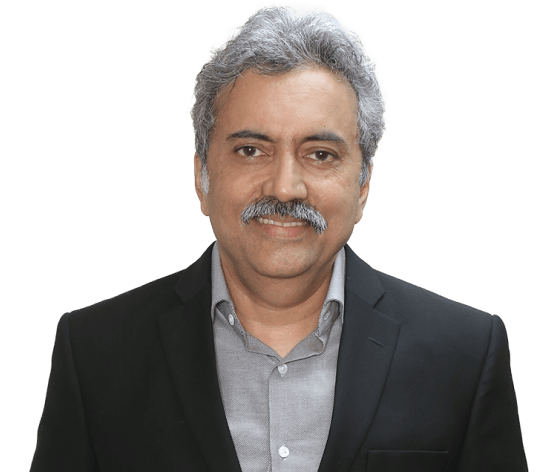
Parag Kothari
Parag Kothari is a private-credit investment professional with more than 25 years of experience in financial services, with a career spanning wholesale lending, corporate finance, investment banking and performing credit. He currently serves as Fund Manager – Performing Credit at EAAA India Alternatives, where he heads the ESOF Strategy (Edelweiss Special Opportunities Fund) under the Private Debt business. EAAA identifies him as part of its Performing Credit investment team.
View Profile →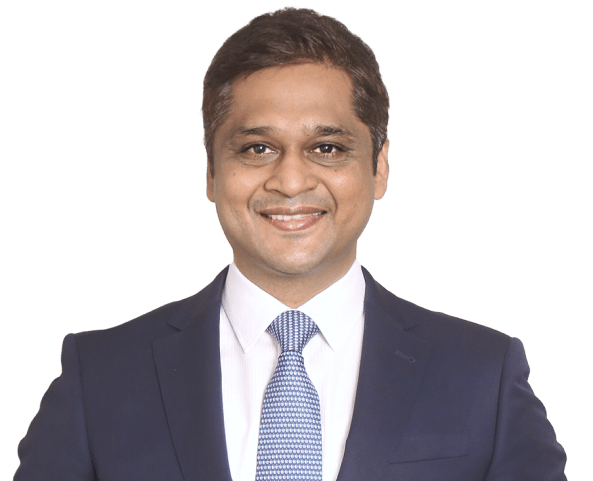
Amit Agarwal
Amit Agarwal is the Chief Executive Officer of EAAA India Alternatives, one of India's established alternative asset-management platforms focused on private credit and real assets. He has been associated with the company since April 1, 2017 and has played a significant role in developing its private-credit platform. Amit has more than 25 years of experience across financial services, including investing, asset management, business development, fundraising and mergers and acquisitions. His specialist expertise lies in private credit, stressed assets, special situations, transaction structuring, asset reconstruction and business turnarounds.
View Profile →Navin Bhutoria
View Profile →Bishnu Agarwal
View Profile →Our Investment Experts
Our experts will understand your goals, map the right strategy across AIFs, PMS, Mutual Funds and Wealth Solutions, and guide you through every step.
Find answers to common questions about fund investments, performance, portfolio strategy, and investor services.
Yes. The Edelweiss Special Opportunities Fund series is a Category II AIF. ESOF IV operates through the Special Opportunities Trust and ESOF IV Onshore Fund structure under EAAA India Alternatives Limited.
The ESOF IV investment team identified in the February 2026 disclosure includes Parag Kothari, Bishnu Agarwal, Navin Bhutoria and Shreyash Deshpande. Parag Kothari and Navin Bhutoria are also identified within the Performing Credit investment team.
ESOF IV was launched in December 2025 and was raising capital as of February 2026. EAAA reported interest from domestic and international institutional investors, family offices, HNIs and UHNIs. Current availability should be confirmed before investing.
Not established from the reviewed primary sources — refer to latest fund documents. The minimum commitment should not be inferred from the general ₹1 crore AIF threshold because the applicable fund-specific terms may differ.
ESOF IV has a US$1 billion target corpus, with a US$500 million greenshoe option, taking the potential total corpus to US$1.5 billion, approximately ₹13,500 crore based on the December 2025 launch announcement. These figures are targets and not equivalent to capital already raised.
The ESOF strategy dates back to 2010. ESOF II reportedly raised approximately ₹2,000 crore between 2015 and 2017, while ESOF III reached a final close of approximately US$900 million or ₹6,600 crore at the time. ESOF III made 17 investments, exited 12 within five years and reported gross returns above 18%. Later reporting stated that 100% of drawn investor capital had been returned before all remaining investments were realised. These figures relate to earlier funds and are not targets for ESOF IV.
Performing credit involves providing financing to borrowers that are generally meeting their repayment obligations, rather than focusing primarily on distressed or defaulted borrowers. The strategy may involve structured loans and other credit instruments, with underwriting focused on the borrower's ability to repay and the protections available to the lender.
ESOF IV aims to provide flexible financing to Indian corporates and sponsors, with target sectors including industrial products, manufacturing, automobiles, chemicals and pharmaceuticals. The fund plans to build a portfolio of approximately 15–17 investments, with an indicative average deal size of ₹450–500 crore.
ESOF IV has a stated seven-year end-to-end tenor and is structured as a close-ended fund. Investors should therefore consider the commitment as illiquid for the fund's stated tenure, subject to the specific provisions of the fund documents.
As a Category II AIF, ESOF generally falls within the Section 115UB pass-through framework, subject to the applicable provisions. The tax treatment differs depending on the character of income and the investor's circumstances. Investors should consult a qualified tax adviser for fund-specific and investor-specific tax treatment.
ESOF IV is a close-ended Category II private-credit AIF that seeks to provide customised financing to corporate borrowers. A debt mutual fund generally invests in a portfolio of marketable debt instruments and is subject to a different regulatory and liquidity framework. ESOF IV also involves capital commitments, drawdowns, private transactions and a seven-year fund structure, making its liquidity profile materially different.
Key risks include borrower default, counterparty risk, collateral-realisation risk, concentration risk, illiquidity, deployment risk, refinancing risk, key-person risk and regulatory or tax changes. The presence of collateral or covenants does not eliminate the possibility of loss or delayed recovery.
Subscribe to the ALTPORT newsletter
Join HNIs, family offices and NRI investors reading with us.
You're on the list
Thanks — we've added your email to the ALTPORT newsletter.