

About Company
Sameeksha Capital
Sameeksha Capital is an investment-management platform focused on Indian equities and related investment opportunities. Its activities span portfolio management services, a domestic Category III AIF and an IFSC/GIFT City investment-management platform. The principal domestic entity, Sameeksha Capital Private Limited, is a SEBI-registered Portfolio Manager and Investment Manager to a Category III AIF. Its investment process is built around fundamental research, business quality, management assessment, valuation discipline and a structured approach to risk.
What Is Sameeksha India Equity Fund PMS?
Sameeksha India Equity Fund is a discretionary Indian equity Portfolio Management Service (PMS) from Sameeksha Capital Private Limited that seeks superior absolute returns from a focused portfolio of 15–35 listed companies across market caps and sectors. Running since 1 April 2016 and managed by founder and CIO Bhavin Shah, it is benchmarked to the BSE 500 TRI, requires a minimum investment of ₹50 lakh and managed ₹1,331.97 crore as of 31 August 2026.
Its research-led, bottom-up approach focuses on business quality, management, competitive advantages, cash flow, capital efficiency and valuation. The portfolio can exceed 35 stocks when the manager sees fit, may hold selected ETFs or mutual funds, and can keep cash when attractive opportunities are scarce.
This PMS is separate from the Sameeksha Capital Investment Fund, a Category III AIF; the two have different structures, documents, liquidity, taxation and performance histories.
Sameeksha India Equity Fund PMS Snapshot
| Particular | Details |
|---|---|
| PMS Name | Sameeksha India Equity Fund |
| PMS Provider | Sameeksha Capital Private Limited |
| Strategy | Equity (multi-cap / flexi-cap) |
| Fund Manager | Bhavin Shah |
| Inception | 1 April 2016 |
| Benchmark | BSE 500 TRI |
| Minimum Investment | ₹50 lakh |
| AUM | ₹1,331.97 crore (31 August 2026, APMI) |
| Typical Portfolio | 15–35 listed companies |
| Single-Sector Limit | Up to 40% |
| Single-Company Limit | Up to 15% at cost / 30% at market value |
| Fixed Fee Option | 2.25% management fee |
| Variable Fee Option | 0.6% management fee + 20% performance fee above a 7% cumulative hurdle, with high-water mark |
| Exit Load | 3% in the first year |
Sameeksha India Equity Fund PMS Performance
Sameeksha India Equity Fund PMS has returned 20.67% annualised since inception to 31 August 2026, against 14.76% for the BSE 500 TRI, and 7.29% over one year against 4.72%, as reported to APMI.
| Period | Sameeksha India Equity Fund | BSE 500 TRI | Difference |
|---|---|---|---|
| 1 Month | -0.38% | -0.09% | -0.29 pp |
| 3 Months | 9.15% | 3.86% | +5.29 pp |
| 6 Months | 11.48% | 1.43% | +10.05 pp |
| 1 Year | 7.29% | 4.72% | +2.57 pp |
| 2 Years | 4.24% | -0.11% | +4.35 pp |
| 3 Years | 16.29% | 12.09% | +4.20 pp |
| 4 Years | 21.63% | 11.90% | +9.73 pp |
| 5 Years | 16.46% | 10.91% | +5.55 pp |
| Since Inception | 20.67% | 14.76% | +5.91 pp |
As on 31 August 2026. Source: APMI. Returns are TWRR; periods over one year are annualised. Past performance does not indicate future returns. Compare strategies on ALTPORT's PMS performance page.
Sameeksha India Equity Fund Multi-Cap Investment Strategy
Sameeksha India Equity Fund follows a flexible multi-cap, flexi-cap approach, picking large-, mid- and small-cap companies wherever it finds the best risk-adjusted opportunities instead of allocating by index weights.
The portfolio is built from fundamental company research, looking for businesses where growth opportunity, competitive advantage, management quality and valuation combine into an attractive long-term investment. With 15–35 holdings, it can carry meaningful exposure to individual stocks and sectors, which makes position sizing central to the process.
How Sameeksha Selects Stocks for the PMS
Sameeksha India Equity Fund selects companies by weighing business opportunity, competitive advantage, management quality, financial strength and valuation, aiming for attractive absolute and risk-adjusted returns.
Business opportunity: companies in large and growing markets that can support sustainable earnings growth.
Competitive advantage: pricing power, market position, customer relationships, cost advantages, barriers to entry and industry structure that protect margins and share.
Management quality: capital-allocation decisions, corporate governance, promoter behaviour, related-party transactions, business strategy and execution record.
Financial quality: revenue and earnings growth, cash-flow generation, return on invested capital, capital efficiency and balance-sheet strength.
Valuation: a strong business is not attractive at any price, so the team uses methods such as discounted cash flow (DCF) and excess-ROE analysis to judge whether expected returns justify the risk.
Sameeksha's Valuation Discipline and Absolute-Return Approach
Sameeksha India Equity Fund aims for superior absolute returns, meaning it focuses on the size and quality of returns relative to the risk taken, not on beating the index every period. It does not mean positive returns in every market.
Valuation drives this approach. The team weighs current valuation, future earnings, cash flow, return on capital and equity, sustainable growth, competitive position and downside risk. When opportunities are scarce or valuations do not justify more exposure, the portfolio can stay partly in cash rather than fully invested.
Portfolio Construction and Concentration Limits
Sameeksha India Equity Fund typically holds 15–35 companies, with indicative limits of 40% in any one sector and, for any one company, 15% at cost or 30% at market value. These are strategy limits, not a description of current holdings, and actual weights change with investment decisions, market moves and rebalancing.
Role of Cash Across Market Cycles
Sameeksha India Equity Fund adjusts its equity exposure to the opportunities available: it invests more when valuations are attractive and enough strong ideas exist, and holds cash or reduces exposure when they are not.
This can cause cash drag when markets rise strongly, but it gives the manager room to deploy capital when good opportunities appear. It is not a claim that the strategy can consistently time market tops and bottoms.
Sameeksha India Equity Fund Minimum Investment, Fees and Exit Load
The minimum investment in Sameeksha India Equity Fund PMS is ₹50 lakh, in line with SEBI's PMS minimum. Investors can choose a fixed fee of 2.25%, or a variable plan of a 0.6% management fee plus a 20% performance fee above a 7% cumulative hurdle applied to a high-water mark. A 3% exit load applies in the first year.
Fees can vary by client agreement, so confirm the fee plan, GST, expenses, performance-fee mechanics, high-water mark and exit terms before investing.
PMS Taxation
In Sameeksha India Equity Fund PMS, securities are held in the client's own account, so tax depends on each transaction, the holding period, the type of security, the investor's status and current tax rules. Take advice from a qualified tax professional. See ALTPORT's guide to PMS taxation.
Sameeksha India Equity Fund PMS vs Sameeksha Capital Investment Fund AIF
Sameeksha India Equity Fund is a PMS, while Sameeksha Capital Investment Fund is a Category III AIF; they are separate products and their performance should never be used in place of each other.
| Feature | Sameeksha India Equity Fund PMS | Sameeksha Capital Investment Fund |
|---|---|---|
| Structure | PMS | Category III AIF |
| Ownership | Securities in the client's own account | Units in the AIF |
| Minimum | ₹50 lakh | Per AIF documents (SEBI floor ₹1 crore) |
| Benchmark | BSE 500 TRI | Per AIF documents |
| Inception | 1 April 2016 | Separate AIF inception |
| Performance | PMS-specific | AIF-specific |
| Taxation | Investor-level | AIF-level |
| Liquidity | Per PMS agreement | Per AIF documents |
| Portfolio | Primarily Indian equity | Indian equity with Category III flexibility, including derivatives |
For a broader comparison, see mutual fund vs PMS vs AIF.
Who Should Invest in Sameeksha India Equity Fund PMS?
Sameeksha India Equity Fund PMS suits HNIs, entrepreneurs, professionals, family offices and other eligible investors who can commit at least ₹50 lakh for the long term and want an actively managed, concentrated multi-cap Indian equity portfolio. Investors should:
- Understand Indian equity-market volatility
- Be comfortable with concentrated portfolios
- Accept periods of underperformance
- Understand that capital is at market risk
It should be judged as part of an overall asset allocation, not on past returns alone. Investors comparing options can browse the best PMS in India or speak to an ALTPORT advisor.
Sameeksha India Equity Fund PMS Risks
The main risks of Sameeksha India Equity Fund PMS are equity-market, concentration, market-cap, valuation, cash-drag, manager, liquidity and capital-loss risk.
Equity-market risk: Market-wide falls reduce portfolio value.
Concentration risk: Large positions in single companies or sectors mean one decline can hit returns hard.
Market-cap risk: Mid and small caps can be more volatile and less liquid.
Valuation risk: A strong company can still deliver poor returns if bought too expensively.
Cash risk: Holding cash can lag the market when equities rise strongly.
Manager risk: Results depend on the manager's research, portfolio construction and execution.
Liquidity risk: Market conditions can make it hard to trade at desired prices.
Capital-loss risk: There is no guarantee of positive returns or capital preservation.
Meet the Fund Manager: Bhavin Shah
Bhavin Shah is the founder and CIO of Sameeksha Capital and the fund manager of Sameeksha India Equity Fund PMS. Before founding Sameeksha Capital, he founded Equirus Securities. His approach centres on process-driven fundamental research, business quality, valuation discipline and finding companies with attractive long-term return potential, rather than tracking market indices.
Related Sameeksha Strategies
Sameeksha Capital also runs the Sameeksha Capital Investment Fund (Category III AIF), the GIFT City-based Sameeksha India Flexicap Equity Fund and the multi-asset Sameeksha India Diversified Investment Strategy. Each has its own structure, objective, asset allocation and risk profile.
How to Invest in Sameeksha India Equity Fund PMS
Investing in Sameeksha India Equity Fund PMS through ALTPORT involves:
- Confirming eligibility
- Reviewing the strategy and disclosures
- Completing KYC
- Setting up demat and bank accounts
- Signing the PMS agreement
- Choosing a fee plan
- Transferring funds or securities
- Completing onboarding
Listen to expert conversations and investment insights anytime on Spotify.

Track how the fund has performed against its benchmark over time through a comparative line graph analysis.
Sameeksha India Equity Fund
Benchmark: BSE 500 TRI
Compare fund returns and benchmark performance across multiple investment periods using a visual bar graph.
Review and compare fund returns against benchmark performance across different investment periods in a detailed tabular format.
Sameeksha Capital Private Limited
| AUM(Cr.) | 1M | 3M | 6M | 1Y | 2Y | 3Y | 4Y | 5Y | Ince. | |
| Performance | ₹1285.58 | -3.05 | -0.21 | 22.69 | 3.73 | 2.63 | 14.56 | 20.90 | 14.78 | 20.14 |
| Benchmark | NA | -5.57 | -3.59 | 8.07 | -2.33 | -3.93 | 9.20 | 11.22 | 8.91 | 14.01 |
Learn about the experienced fund managers responsible for investment decisions, portfolio strategy, and long-term fund performance.
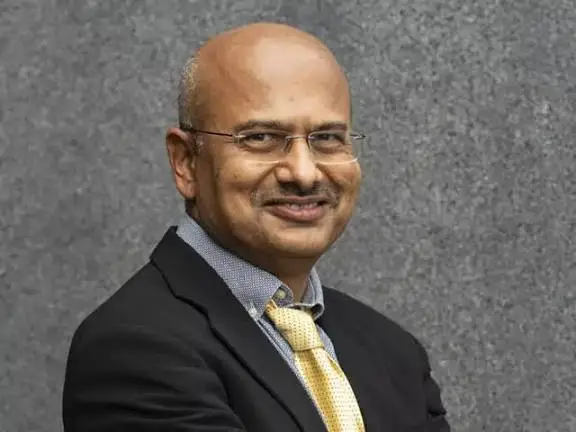
Bhavin Shah
Bhavin Shah is the Founder & Chief Investment Officer (CIO) of Sameeksha Capital and an experienced equity fund manager and investment professional. His career spans global institutional equity research, technology research and portfolio management, with experience at Credit Suisse, JP Morgan and Equirus Securities. He brings a research-driven approach to Indian equities, combining bottom-up fundamental analysis with financial modelling, valuation and detailed business research. As CIO, he leads Sameeksha Capital's investment platform and its portfolio-management activities.
View Profile →Our Investment Experts
Our experts will understand your goals, map the right strategy across AIFs, PMS, Mutual Funds and Wealth Solutions, and guide you through every step.
Find answers to common questions about fund investments, performance, portfolio strategy, and investor services.
Sameeksha India Equity Fund is a discretionary Indian equity PMS from Sameeksha Capital, managed by Bhavin Shah since 2016, that invests in a focused portfolio of 15–35 listed compWhat is Sameeksha India Equity Fund PMS? anies across market caps for superior absolute returns.
Is Sameeksha India Equity Fund a PMS or an AIF?
Sameeksha India Equity Fund PMS has returned 20.67% annualised since inception and 7.29% over one year to 31 August 2026, against 14.76% and 4.72% for the BSE 500 TRI, as reported to APMI.
Bhavin Shah, founder and CIO of Sameeksha Capital, manages Sameeksha India Equity Fund PMS.
The minimum investment in Sameeksha India Equity Fund PMS is ₹50 lakh, in line with SEBI's minimum for PMS.
Sameeksha India Equity Fund PMS is benchmarked to the BSE 500 TRI.
Sameeksha India Equity Fund PMS was launched on 1 April 2016.
Yes. Sameeksha India Equity Fund invests across large, mid and small caps without being tied to one market-cap segment.
Sameeksha India Equity Fund typically holds 15–35 companies, and can exceed that range when the manager considers it appropriate.
Yes. Sameeksha India Equity Fund can hold cash or reduce equity exposure when opportunities are scarce or valuations are unattractive.
Sameeksha India Equity Fund PMS managed ₹1,331.97 crore as of 31 August 2026, as reported to APMI.
Sameeksha India Equity Fund PMS offers a fixed fee of 2.25%, or a variable plan of a 0.6% management fee plus 20% of returns above a 7% cumulative hurdle, with a high-water mark.
Sameeksha India Equity Fund PMS charges a 3% exit load in the first year.
The main risks of Sameeksha India Equity Fund PMS are equity-market, concentration, market-cap, valuation, liquidity and manager risk, cash drag and possible loss of capital.
Sameeksha India Equity Fund PMS holds securities in each client's own account, while Sameeksha Capital Investment Fund is a pooled Category III AIF that can also use derivatives. Their performance, fees, tax and liquidity are separate.
Subscribe to the ALTPORT newsletter
Join HNIs, family offices and NRI investors reading with us.
You're on the list
Thanks — we've added your email to the ALTPORT newsletter.