

About Company
Singularity AMC LLP
Singularity AMC LLP is an investment management platform focused on growth-oriented businesses across private and public markets. Its approach combines sector research, investment expertise and operational perspectives to support companies as they scale. The platform’s three principal offerings are Growth Private Equity, Strategic Autonomy and Public Equity (PIPE).
Category II AIF | VC/PE Funds, Secondaries & Co-Investments
Singularity Fund of Funds II (SFoF II) is a Category II Alternative Investment Fund designed to provide diversified access to private equity and venture capital opportunities. Managed by Singularity AMC, its multi-strategy approach combines primary fund commitments, secondary private equity transactions and direct co-investments. The stated target corpus is ₹400 crore, with a ₹100 crore green-shoe option.
Singularity Fund of Funds II: Key Details
| Parameter | Details |
| Fund name | Singularity Fund of Funds II |
| Common abbreviation | Singularity SFoF II |
| Category | SEBI-registered Category II AIF |
| Investment manager | Singularity AMC LLP |
| Fund managers listed on ALTPORT | Yash Kela and Madhu Kela |
| Target fund size | ₹400 crore |
| Green-shoe option | ₹100 crore |
| Sponsor commitment | ₹60 crore |
| Primary fund allocation | Approximately 40–50% |
| Secondaries and co-investments | Up to 60% |
| Minimum investment | ₹1 crore, subject to applicable fund terms |
| Tenure | 10 years, extendable by two one-year periods |
| Initial drawdown | 20% |
| Subsequent drawdowns | 10–20% every 4–6 months |
| Placement fee | Up to 2% |
| Annual management fee | 2% per annum |
| Performance fee | 20%, with catch-up |
| Hurdle rate | 10% per annum, pre-tax |
What Is Singularity Fund of Funds II?
Singularity Fund of Funds II AIF is a private-market investment vehicle that provides access to multiple private equity (PE) and venture capital (VC) funds, secondary transactions and selected direct investments. Instead of relying exclusively on commitments to newly raised funds, SFoF II combines primary allocations with opportunities involving more mature investments.
This structure is intended to diversify exposure across fund managers, investment stages and vintages while potentially bringing forward distributions through secondary holdings and co-investments.
The strategy is relevant to investors exploring a private equity fund of funds or venture capital fund of funds in India. Its investment outcome depends on the quality of underlying managers, purchase valuations, company performance, fees and exit conditions.
SFoF II is distinct from the earlier Singularity Fund of Funds AIF. The two schemes should be assessed separately, particularly when comparing portfolio construction, fund-level performance and commercial terms.
Singularity Fund of Funds II Structure and Category
SFoF II is structured as a Category II AIF, a regulatory category commonly used for private-market investment strategies that do not fall under Category I or Category III.
The scheme has a stated tenure of 10 years, extendable by two additional one-year periods. Investors should therefore plan for a long holding period rather than assume that their capital will be available at a specific intermediate date.
The target corpus is ₹400 crore, with an additional ₹100 crore green-shoe option. Param Ventures LLP is identified as the sponsor, with a stated commitment of ₹60 crore.
The minimum investment is ₹1 crore under the reported terms. Actual participation is governed by the fund's private placement memorandum (PPM), subscription documents and applicable eligibility requirements.
Learn more about Alternative Investment Funds in India to understand how AIF structures differ from mutual funds and other investment products.
Singularity SFoF II Investment Strategy
The Singularity SFoF II investment strategy combines three routes to private-market exposure.
Primary VC and PE fund allocations
Approximately 40–50% of the portfolio is intended for primary investments in VC and PE funds. Selection focuses on fund managers with relevant experience, differentiated sourcing capabilities, established networks and expertise in specific sectors or investment stages.
Primary commitments provide exposure to the underlying funds' investment programmes. However, capital may be deployed over several years, and the portfolio can take time to mature.
Secondary private equity investments
Up to 60% of the strategy may be allocated across secondaries and co-investments. Secondary private equity transactions can involve purchasing an existing investor's interest in a private fund or acquiring an interest linked to an underlying portfolio company.
These transactions may offer exposure to more mature assets with an existing operating history. They can also provide a clearer view of the underlying portfolio than a newly launched, blind-pool fund.
Direct co-investments and incubated funds
The strategy also allows selected direct investments alongside established fund managers, as well as investments in funds incubated by Singularity.
Co-investments can provide direct exposure to growth-stage companies. Their outcomes depend on the company's fundamentals, entry valuation, governance and eventual exit. A lower fee burden on a co-investment does not necessarily mean lower investment risk.
The combination of primary commitments, secondaries and co-investments is intended to diversify the portfolio across managers, vintages and investment stages. Diversification cannot eliminate losses.
How Singularity Fund of Funds II Selects PE and VC Funds
Fund manager selection is central to a fund-of-funds strategy because investors are exposed to the decisions and results of multiple underlying investment teams.
Relevant considerations include:
- Manager pedigree: Experience, investment discipline and the ability to execute a stated strategy.
- Vintage selection: The investment environment in which a fund deploys capital can affect entry valuations and exit opportunities.
- Investment strategy: Whether the manager's sector, stage and deal-selection approach fits the intended portfolio.
- Track record: Historical fund outcomes, distributions and realised exits, interpreted in the context of the market cycle and the manager's role.
- Sourcing network: Access to investment opportunities that may not be broadly available to outside investors.
- Portfolio construction: Overlap between underlying funds, sector exposure and concentration across companies or investment stages.
- Fees and alignment: The impact of underlying management fees, carry, expenses and sponsor commitments on investor returns.
Due diligence may involve reviewing fund documents, portfolio companies, valuation practices, governance and the manager's reporting quality. These checks support investment decisions but do not guarantee future performance.
Singularity Fund of Funds II Secondary Investment Strategy
Secondary transactions are an important part of SFoF II's multi-strategy design. They can involve the purchase of an existing limited partner's interest in a PE/VC fund or an interest associated with a mature underlying asset.
A secondary transaction may offer several potential advantages:
- Exposure to a portfolio that has already made investments.
- Access to underlying companies with an established operating history.
- A purchase price that may differ from the reported net asset value (NAV).
- Potentially earlier distributions than a newly committed primary fund.
A discount to NAV is not automatically a bargain. Reported valuations may be dated, company conditions may have changed, and the eventual exit price may be lower than expected. The discount must be assessed alongside the quality of the assets, remaining capital obligations and likely exit timeline.
LP secondary transactions can also be affected by transfer approvals, fund documentation, outstanding commitments and the seller's reason for exiting. A secondary market AIF strategy may reduce some uncertainty associated with investing in newly launched funds, but it does not remove valuation or liquidity risk.
Singularity Fund of Funds II Co-Investments
Co-investments allow SFoF II to invest directly alongside a general partner (GP) in selected companies. These opportunities can complement primary fund allocations and secondary purchases.
The strategy may consider growth-stage businesses, including companies raising later-stage financing. The investment decision depends on the company's financial position, competitive advantage, valuation and the terms negotiated for the transaction.
Co-investments can reduce the effect of an additional layer of fund-level fees on that portion of capital. They can also increase exposure to individual companies, so their contribution to portfolio risk needs to be considered alongside the overall allocation.
Singularity Fund of Funds II Allocation and Drawdown Structure
The stated allocation model is approximately 40–50% in primary investments and up to 60% in secondaries and co-investments. These are strategic allocation ranges, not a guarantee of the portfolio's current composition.
The reported drawdown schedule comprises:
| Drawdown term | Reported structure |
| Initial drawdown | 20% |
| Subsequent drawdowns | 10–20% every 4–6 months |
| Capital commitment | Subject to the subscription documents |
| Investment period | Governed by the PPM and fund terms |
A drawdown schedule determines when investors must contribute committed capital. Investors should maintain sufficient liquidity to meet capital calls on time. Failure to fund a drawdown can have consequences under the fund documents.
The actual timing and amount of capital calls depend on deployment needs and the fund's governing terms.
Singularity Fund of Funds II Fees, Carry and Hurdle
The reported commercial terms for Singularity SFoF II are:
| Fee or term | Reported amount |
| Placement fee | Up to 2% |
| Annual management fee | 2% per annum |
| Performance fee or carry | 20%, with catch-up |
| Hurdle rate | 10% per annum, pre-tax |
The hurdle rate is the return threshold used in calculating performance-linked compensation under the agreed terms. A catch-up provision determines how profit sharing is applied after the hurdle condition is met.
Investors should also consider expenses and the fees charged by underlying PE/VC funds. The stated fee approach aims to avoid an additional layer of management fees and carry on specified underlying investments, but the exact treatment depends on the structure and relevant documents.
Net returns can differ materially from gross underlying investment returns after fees, expenses, taxes and carry.
Singularity Fund of Funds II Portfolio and Sector Exposure
The investment approach is designed to provide PE/VC diversification across managers, vintages, investment stages and sectors. Stated areas of interest include:
- Consumer businesses
- Financial services
- Healthcare
- Industrials and manufacturing technology
- Energy transition
- Enterprise technology and software
These sectors describe the intended investment universe rather than a confirmed current allocation. The actual Singularity SFoF II portfolio may change as commitments are made, secondary transactions close and co-investment opportunities arise.
The broader Singularity platform has highlighted companies such as Servify, Qucev, Lohum and Bombay Shirt Company. Those names should not automatically be treated as confirmed direct holdings of SFoF II without scheme-level attribution.
Singularity Fund of Funds II Performance and Returns
No current, dated numerical performance series for SFoF II is presented here. The earlier Singularity Fund of Funds I has separately reported historical IRR and TVPI figures, but those results belong to a different scheme and should not be represented as Singularity SFoF II returns.
For a fund of funds, performance analysis should distinguish between gross returns of underlying investments and the scheme's net outcomes after fees, expenses and carry. Relevant measures include:
- IRR or XIRR: The annualised return that accounts for the timing of cash flows.
- TVPI: Total value relative to paid-in capital, including distributions and remaining portfolio value.
- DPI: Distributed capital relative to paid-in capital.
- Net returns: Outcomes after applicable costs and performance-linked fees.
A target return, an underlying fund's historical return and the scheme's realised return are different measures. Investors should assess them separately.
Singularity Fund of Funds II Manager and Investment Team
ALTPORT lists Yash Kela and Madhu Kela as fund managers for Singularity Fund of Funds II.
Yash Kela is the founder and Chief Investment Officer of Singularity. His investment background includes private-market transactions and relationships with fund managers, institutional investors and family offices.
Madhu Kela is a public-market investor who previously served as Chief Investment Strategist at Reliance Capital. He is also associated with the investment leadership of the broader Singularity platform.
The team and its network are relevant to sourcing, evaluating and monitoring private-market investments. The quality of individual underlying managers and the terms of each transaction remain important determinants of investment outcomes.
Singularity Fund of Funds II Risks and Liquidity
SFoF II involves several risks associated with private-market investing:
- Underlying fund risk: Returns depend on the performance and decisions of selected VC and PE managers.
- Manager-selection risk: A manager's past performance may not continue, and investment strategies can underperform.
- Valuation risk: Private assets may be valued infrequently and may not be saleable at reported NAV.
- Secondary pricing risk: Discounts can narrow or widen, and a discounted purchase may still result in a loss.
- Concentration risk: Exposure may become concentrated across particular companies, sectors, managers or vintages.
- Liquidity risk: Investors generally cannot redeem on demand, and transfers may be restricted.
- J-curve risk: Primary fund commitments may produce costs and limited early distributions before exits begin.
- Capital-call risk: Investors must meet drawdown obligations even when market conditions deteriorate.
- Exit risk: IPOs, acquisitions and secondary sales may be delayed or fail to occur.
The 10-year tenure, with possible extensions, makes liquidity planning essential. Earlier distributions are possible but not assured.
Singularity Fund of Funds II vs Other Singularity Funds
| Strategy | Broad investment approach |
| Singularity Fund of Funds II | Primary PE/VC funds, secondaries and co-investments |
| Singularity Growth Opportunities Fund | Growth-oriented private-market investments |
| Singularity Growth Capital Fund | Growth capital strategy |
| Singularity Equity Fund | Listed-equity investment strategy |
These products have different mandates and risk exposures. Investors should compare their governing documents, investment horizons, fees and portfolio exposures rather than rank them on the basis of unrelated performance figures.
How to Invest in Singularity Fund of Funds II Through ALTPORT
Investors considering Singularity Fund of Funds II can begin by reviewing the scheme's PPM, commercial terms, eligibility requirements and drawdown schedule. The minimum investment under the reported terms is ₹1 crore.
Before committing, assess the tenure, capital-call obligations, fee structure, secondary-investment risks and expected liquidity. Investors should also understand how underlying fund fees and performance-linked compensation affect net returns.
Explore all AIF funds in India or contact ALTPORT to request the relevant fund information and discuss the onboarding process.
Listen to expert conversations and investment insights anytime on Spotify.

Watch our podcast episodes featuring expert interviews, market insights, investment strategies, and in-depth discussions on the latest financial trends.

Learn about the experienced fund managers responsible for investment decisions, portfolio strategy, and long-term fund performance.

Yash Kela
Yash Kela is an investor and entrepreneur with experience in private equity, venture capital and public-market investments. He is the Founder and Chief Investment Officer (CIO) at Singularity, a platform he established in 2015 to participate in investment opportunities across private and public markets. His work focuses on identifying growth-stage businesses, collaborating with founders and supporting companies as they expand.
View Profile →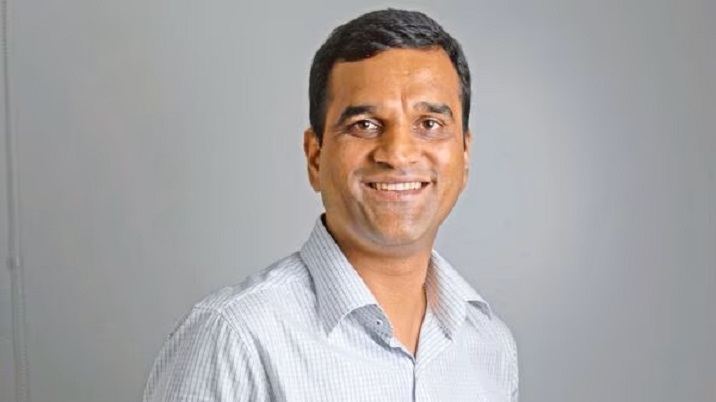
Madhu Kela
Madhu Kela is a prominent public market investor in India, having invested public funds for over three decades. Previously, he served as the Chief Investment Strategist at Reliance Capital, a leading asset management company in India, where he oversaw a flagship scheme that achieved a CAGR of 28%, significantly outperforming the S&P BSE 100 benchmark, which recorded a 15% CAGR, marking it as one of the most successful in India’s investment history.
View Profile →Our Investment Experts
Our experts will understand your goals, map the right strategy across AIFs, PMS, Mutual Funds and Wealth Solutions, and guide you through every step.
Find answers to common questions about fund investments, performance, portfolio strategy, and investor services.
Singularity Fund of Funds II is a Category II AIF investing across primary VC/PE funds, secondary transactions and selected co-investments.
Yes. It is structured as a Category II Alternative Investment Fund.
Its strategy includes primary private equity and venture capital funds, secondary interests in funds or companies, and direct co-investments.
Yes. Primary PE fund commitments form part of the stated allocation strategy.
Yes. The strategy includes VC funds alongside PE fund allocations.
They can include purchases of existing LP interests in private funds or interests linked to underlying assets. Their pricing and liquidity depend on the transaction and asset quality.
Yes. The strategy allows selected direct co-investments alongside fund managers.
The stated approach allocates approximately 40–50% to primary funds and up to 60% to secondaries and co-investments.
The reported minimum investment is ₹1 crore, subject to the applicable fund documents and terms.
The reported terms include a placement fee of up to 2%, annual management fees of 2%, and performance fees of 20% with catch-up over a 10% per annum pre-tax hurdle.
The stated tenure is 10 years, extendable by two additional one-year periods.
Key risks include underlying manager performance, valuation uncertainty, secondary pricing, illiquidity, capital calls, concentration and delayed or unsuccessful exits.
Subscribe to the ALTPORT newsletter
Join HNIs, family offices and NRI investors reading with us.
You're on the list
Thanks — we've added your email to the ALTPORT newsletter.