

About Company
Sameeksha Capital
Sameeksha Capital is an investment-management platform focused on Indian equities and related investment opportunities. Its activities span portfolio management services, a domestic Category III AIF and an IFSC/GIFT City investment-management platform. The principal domestic entity, Sameeksha Capital Private Limited, is a SEBI-registered Portfolio Manager and Investment Manager to a Category III AIF. Its investment process is built around fundamental research, business quality, management assessment, valuation discipline and a structured approach to risk.
What Is Sameeksha Capital Investment Fund?
Sameeksha Capital Investment Fund is a SEBI-registered Category III AIF (IN/AIF3/18-19/0640) managed by Sameeksha Capital Private Limited that seeks long-term capital appreciation from a concentrated portfolio of Indian equities, with the flexibility to use equity derivatives, hold cash and manage risk. Its equity strategy is Sameeksha India Equity Fund, and it is led by founder and CIO Bhavin Shah.
Unlike a conventional long-only equity product, the fund can adjust equity exposure, cash levels and hedging. Its research puts heavy weight on business quality, sustainable competitive advantages, management capability, capital allocation, corporate governance, return on invested capital (ROIC) and valuation discipline.
Sameeksha Capital Investment Fund vs Sameeksha India Equity Fund PMS
Sameeksha Capital Investment Fund is a Category III AIF, while Sameeksha India Equity Fund PMS is a separate portfolio management service with a similar name. Sameeksha India Equity Fund is also the name of the AIF's equity strategy, which causes confusion.
The AIF and the PMS are separate products, so their performance, AUM, portfolio construction, terms, taxation and liquidity must be judged independently. PMS performance is not AIF performance. For how the structures differ, see mutual fund vs PMS vs AIF.
Sameeksha Capital Investment Fund Snapshot
| Particular | Details |
|---|---|
| Fund | Sameeksha Capital Investment Fund |
| Category | Category III AIF |
| SEBI AIF Registration | IN/AIF3/18-19/0640 |
| Investment Manager | Sameeksha Capital Private Limited |
| Equity Strategy | Sameeksha India Equity Fund |
| Primary Asset Class | Indian listed equities and equity-oriented securities |
| Core Portfolio | Concentrated, about 15–30 stocks |
| Sector Limit | Maximum 40% in a single sector |
| Alternate Strategy | Permitted equity derivatives and other eligible securities |
| Objective | Long-term sustainable capital appreciation with risk management |
| Investment Leader | Bhavin Shah, Founder & CIO |
Sameeksha Capital Investment Fund Investment Strategy
Sameeksha Capital Investment Fund's core strategy invests in a concentrated portfolio of about 15–30 Indian equity and equity-oriented securities across sectors, aiming for sustainable long-term capital appreciation rather than tracking an index. It looks for businesses with an attractive mix of growth potential, competitive strength, management quality and valuation.
The portfolio is flexible across market caps and sectors, with sector allocation set by the investment manager and capped at 40% in any one sector. It can also consider turnaround situations and cyclical businesses where valuation offers an opportunity. The framework favours companies with:
- Attractive end-market growth
- Potential for market-share gains
- Sustainable competitive advantages
- Pricing power
- Efficient cost structures
- Competent management
- Conservative accounting
- Sound capital allocation
- Strong corporate governance
- Attractive ROIC
- Growth in revenue, earnings and cash flow
In extreme market conditions, the fund can reduce equity exposure, hold larger cash positions or use other permitted methods to manage exposure.
How Sameeksha Selects Companies for the AIF Portfolio
Sameeksha Capital Investment Fund selects companies by combining qualitative research with quantitative analysis to judge whether the expected return adequately compensates for the risk.
Qualitative factors: promoter intent, competitive advantage, sector growth potential, corporate structure, external headwinds and credit quality.
Quantitative factors: current valuation, earnings dependency, historical cash-flow generation and expected returns over three to five years.
The framework also examines pricing power, customer concentration, operating efficiency, past management decisions, alignment of shareholder interests, related-party transactions, historical ROIC versus cost of capital, financial-ratio trends, accounting quality and capital-expenditure plans. Valuation uses cash-flow-based methods and excess-ROE analysis where relevant.
Core Strategy vs Alternate Derivatives Strategy
Sameeksha Capital Investment Fund's Core Strategy holds equities for long-term capital appreciation, while an Alternate Strategy for part of the portfolio can use equity derivatives and other permitted securities. Possible instruments include:
- Index futures and options
- Stock futures and options
- Other approved equity derivatives
- Equity shares, debt securities or other permitted securities held short term
Derivatives are portfolio-management tools within the Category III structure. They are not necessarily used all the time, and the fund is not permanently a long-short or arbitrage strategy.
Cash Allocation, Hedging and Risk Management
Sameeksha Capital Investment Fund manages risk through diversification, position sizing, liquidity limits, selling stocks when valuations become excessive, and the flexibility to raise cash or reduce equity exposure in extreme markets. Its buy and sell framework can also push cash levels higher when valuations look stretched.
The fund can also aim to earn extra returns by lending holdings through the Stock Lending and Borrowing Mechanism (SLBM), and may invest in IPOs, debt instruments or other permitted securities, within its fund documents and regulatory limits. These are supplementary to the core equity strategy.
This flexibility does not guarantee downside protection; equity losses, concentration losses and derivative losses remain possible.
Sameeksha Capital Investment Fund Performance
Sameeksha Capital Investment Fund's performance is reported to investors through AIF-specific reports and factsheets; it is separate from, and should not be compared directly with, the Sameeksha India Equity Fund PMS track record. Investors can request the latest dated AIF performance, including its methodology, benchmark and fee basis, through ALTPORT.
Minimum Investment, Fees, Hurdle and Redemption Terms
Sameeksha Capital Investment Fund's minimum commitment, fees and redemption terms are set out in its Private Placement Memorandum (PPM) and subscription documents; SEBI's minimum for any AIF investor is ₹1 crore. The documents cover:
- Minimum commitment
- Management fee
- Performance fee
- Hurdle rate
- High-water mark
- Lock-in, if any
- Redemption frequency and notice period
- Exit charges, if any
- Taxes and expenses
These terms differ from the PMS, so they should not be taken from the PMS or older third-party listings. For an overview of AIF costs, see AIF fees and charges.
Who Should Invest in Sameeksha Capital Investment Fund?
Sameeksha Capital Investment Fund suits eligible HNIs, UHNIs, family offices and institutions that want actively managed, concentrated Indian equity exposure through a Category III AIF and have a long investment horizon. Investors should:
- Understand equity-market volatility
- Be comfortable with concentrated portfolios
- Tolerate periods of underperformance
- Understand derivatives-related risks
Investors should weigh liquidity, taxation, risk tolerance and overall portfolio allocation before investing. Non-resident investors can also consider Sameeksha's GIFT City fund, Sameeksha India Flexicap Equity Fund, or read about AIF investment for NRIs.
Sameeksha Capital Investment Fund Risks
The main risks of Sameeksha Capital Investment Fund are equity-market, concentration, sector, derivatives, liquidity, valuation, manager, tax and regulatory, and capital-loss risk.
Equity-market risk: Share prices can fall due to company, sector or broad market factors.
Concentration risk: With 15–30 holdings, a sharp fall in one or more positions can hit overall returns.
Sector risk: Even with a 40% cap, sector concentration can increase volatility.
Derivatives risk: Futures and options can add leverage, mark-to-market swings and large losses; their use is not guaranteed hedging.
Liquidity risk: Some securities or market conditions can make it hard to exit at the desired price.
Valuation risk: High-quality businesses can become poor investments when prices run well ahead of fair value.
Manager risk: Results depend heavily on the manager's research, portfolio construction and execution.
Tax and regulatory risk: Category III AIF taxation and regulation are complex and can change; take professional tax and legal advice.
Capital-loss risk: There is no assurance the fund will meet its objective or preserve capital.
Related Sameeksha Investment Strategies
Sameeksha Capital also runs the Sameeksha India Equity Fund PMS, the multi-asset Sameeksha India Diversified Investment Strategy and the GIFT City-based Sameeksha India Flexicap Equity Fund. Each has its own structure, mandate, jurisdiction, liquidity and risk profile.
How to Invest in Sameeksha Capital Investment Fund
Investing in Sameeksha Capital Investment Fund through ALTPORT involves:
- Confirming investor eligibility
- Reviewing the latest PPM and fund documents
- Completing KYC and documentation
- Reviewing the contribution or subscription agreement
- Understanding fees, liquidity and tax
- Completing the subscription
- Funding the investment
Listen to expert conversations and investment insights anytime on Spotify.

Learn about the experienced fund managers responsible for investment decisions, portfolio strategy, and long-term fund performance.
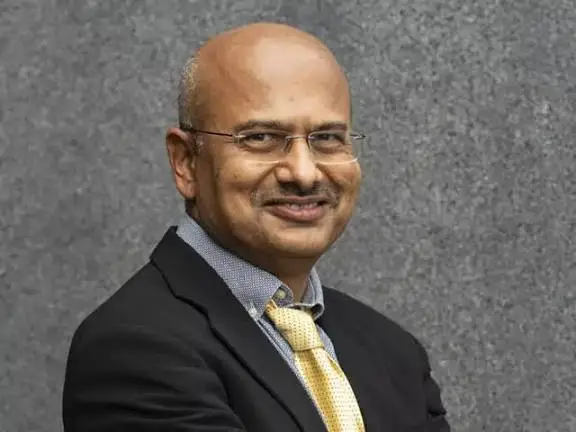
Bhavin Shah
Bhavin Shah is the Founder & Chief Investment Officer (CIO) of Sameeksha Capital and an experienced equity fund manager and investment professional. His career spans global institutional equity research, technology research and portfolio management, with experience at Credit Suisse, JP Morgan and Equirus Securities. He brings a research-driven approach to Indian equities, combining bottom-up fundamental analysis with financial modelling, valuation and detailed business research. As CIO, he leads Sameeksha Capital's investment platform and its portfolio-management activities.
View Profile →Our Investment Experts
Our experts will understand your goals, map the right strategy across AIFs, PMS, Mutual Funds and Wealth Solutions, and guide you through every step.
Find answers to common questions about fund investments, performance, portfolio strategy, and investor services.
Sameeksha Capital Investment Fund is a SEBI-registered Category III AIF managed by Sameeksha Capital that invests mainly in a concentrated portfolio of Indian equities, aiming for long-term capital appreciation while managing risk through cash and derivatives flexibility.
Yes. Sameeksha Capital Investment Fund is registered with SEBI as a Category III AIF. See ALTPORT's https://www.altportfunds.com/aif-category-iii/Category III AIF guide.
Sameeksha Capital Investment Fund's SEBI registration number is IN/AIF3/18-19/0640.
Sameeksha India Equity Fund is the equity strategy of Sameeksha Capital Investment Fund, the Category III AIF. It is separate from Sameeksha Capital's PMS of a similar name.
No. Sameeksha India Equity Fund AIF and Sameeksha India Equity Fund PMS are separate products with different structures, performance, AUM, terms and documents. See the Sameeksha India Equity Fund -https://www.altportfunds.com/investments/sameeksha-india-equity-fund/ PMS page.
Sameeksha Capital Investment Fund invests mainly in 15–30 Indian equity and equity-oriented securities, and can use permitted derivatives and other eligible securities through its alternate strategy.
No. Sameeksha Capital Investment Fund's core strategy is equity-focused, but its Category III structure also allows derivatives and other permitted instruments, so it is not a conventional long-only fund.
Yes. Sameeksha Capital Investment Fund can use index futures and options, stock futures and options, and other approved equity derivatives, within its fund documents and regulations.
Yes. Sameeksha Capital Investment Fund can take larger cash positions and reduce equity exposure in extreme market conditions or when valuations look stretched.
Sameeksha Capital Investment Fund's minimum commitment is set in its PPM. SEBI's minimum investment for any AIF investor is ₹1 crore, which differs from the PMS minimum.
Sameeksha Capital Private Limited is the investment manager of Sameeksha Capital Investment Fund, and founder and CIO Bhavin Shah leads its investment strategy.
Sameeksha Capital Investment Fund's management fee, performance fee, hurdle and high-water mark are set in its PPM and subscription documents, available on request through ALTPORT.
Sameeksha Capital Investment Fund's redemption frequency, notice period and any lock-in are set in its PPM and subscription documents.
The main risks of Sameeksha Capital Investment Fund are equity-market volatility, portfolio and sector concentration, liquidity, valuation, derivatives, manager risk, tax and regulatory change and possible loss of capital.
Subscribe to the ALTPORT newsletter
Join HNIs, family offices and NRI investors reading with us.
You're on the list
Thanks — we've added your email to the ALTPORT newsletter.