

About Company
EAAA India Alternatives
EAAA India Alternatives Limited is an alternative asset management platform in India focused primarily on Private Credit and Real Assets. The company was formerly known as Edelweiss Alternative Asset Advisors Limited and has been active in India's alternatives market for more than 17 years. Its business is focused on identifying private-market opportunities and creating investment solutions for domestic and global investors.
Edelweiss Private Alternative Investment Trust is a SEBI-registered Category II AIF (IN/AIF2/20-21/0782) on the EAAA India Alternatives platform whose scheme is ESOF III Investment Fund, the third fund in Edelweiss's Special Opportunities Fund series. ESOF III is a performing credit fund that has returned 100% of drawn investor capital.
The trust is the AIF structure, while ESOF III is the investment fund operating within it. Fund size, mandate, portfolio and performance figures therefore belong to ESOF III, not to the trust as a whole.
About ESOF III
ESOF III is a performing credit fund that provides structured, flexible financing to Indian companies for acquisitions, expansion, refinancing, buyouts and stake consolidation. It is the third vintage of the Edelweiss Special Opportunities Fund series, which EAAA has run for about 15 years across several credit cycles.
At its 2020 final close, ESOF III raised approximately US$900 million (around ₹6,600 crore at the time) from global institutional investors, including Ontario Teachers' Pension Plan Board, Florida's State Board of Administration, Sweden's AP4 and a European insurance investor. The ESOF series targets gross INR returns of 16–18%; this is a target, not a guaranteed return.
What Is Edelweiss Private Alternative Investment Trust?
Edelweiss Private Alternative Investment Trust is the Category II AIF trust that houses ESOF III Investment Fund, as identified in EAAA's 2024, 2025 and 2026 registration and investment-team disclosures.
An AIF trust is the legal and regulatory structure, while the scheme within it defines how capital is deployed. Investors should therefore read the trust's registration and ESOF III's commercial terms as two separate things.
Edelweiss Private Alternative Investment Trust Snapshot
| Particular | Details |
|---|---|
| Trust Name | Edelweiss Private Alternative Investment Trust |
| AIF Category | Category II |
| SEBI Registration No. | IN/AIF2/20-21/0782 |
| Scheme | ESOF III Investment Fund |
| Investment Platform | EAAA India Alternatives Limited |
| Strategy | Performing and structured credit |
| Final Close | 2020 (~US$900 million / ~₹6,600 crore) |
| Fund Size (July 2026 disclosure) | ₹7,250 crore |
| Target Return (ESOF series) | 16–18% gross INR |
| Realisations (July 2026) | ~₹8,700 crore |
| Investments Exited | 15 of 17 |
| Status | Closed; 100% of drawn investor capital returned |
ESOF III Investment Strategy: Performing Private Credit
ESOF III invests in performing credit, providing structured financing to established Indian companies that need long-term, flexible capital that banks and traditional lenders may not offer. Typical uses include acquisitions, growth capital, refinancing, buyouts and stake consolidation.
Edelweiss positioned the fund around the gap in India's credit markets left as traditional lenders reduced their participation in certain structured-credit opportunities. Returns depend on underwriting, deal structuring, security arrangements and active monitoring of each borrower.
Like most closed-ended private credit funds in India, ESOF III runs on a drawdown and exit cycle. Capital is called as deals are made, and distributions come back as investments are repaid or exited, over several years rather than through daily liquidity.
ESOF III Performance: 100% of Investor Capital Returned
ESOF III returned 100% of drawn investor capital in July 2026, after realising approximately ₹8,700 crore through exits from 15 of its 17 investments. The milestone followed the exit of a ₹950 crore investment in a global agrochemicals platform.
Returning 100% of drawn capital means investors have received back an amount equal to what they invested; it does not mean a 100% return. The ₹8,700 crore realised includes both capital and investment returns, and the two remaining investments could generate further proceeds. EAAA has said the remaining portfolio is on track to deliver the fund's target returns.
These figures relate to ESOF III and should not be read as trust-level returns or as the performance of any other Edelweiss AIF.
Edelweiss Private Alternative Investment Trust Investment Team
EAAA's February 2026 investment-team document lists Parag Kothari, Navin Bhutoria, Bishnu Agarwal, Shreyash Deshpande, Parv Garg, Harsha Varma and Vishnu Gupta as the key investment team for the trust and ESOF III.
Parag Kothari is identified by EAAA as Fund Manager – Performing Credit and heads the ESOF strategy. He has over 25 years of experience in financial services and has been part of the ESOF series since its first fund. Amit Agarwal, Chief Executive Officer of EAAA, oversees the wider private credit platform.
Minimum Investment, Tenure and Fees
The minimum investment for Edelweiss Private Alternative Investment Trust is subject to SEBI's AIF floor of ₹1 crore per investor, with ESOF III's exact commitment, drawdown schedule, tenure and fees set in its private placement memorandum.
Private credit funds such as ESOF III typically have defined investment and realisation periods, management fees and performance-linked fees or carry. Investors should not apply the terms of another Edelweiss AIF to this trust.
For a broader view of AIF cost components, see ALTPORT's guide to AIF fees and charges.
Is Edelweiss Private Alternative Investment Trust Open for Investment?
ESOF III is not open to new investors: it reached final close in 2020 and has since returned 100% of drawn investor capital. EAAA is currently deploying capital through the fourth fund in its performing credit series, ESOF IV.
Investors interested in EAAA's performing credit strategy can ask about the current fund in the series, or compare other private credit AIFs such as Edelweiss Credit Opportunities Trust and Neo Special Credit Opportunities Fund II, or speak to an ALTPORT advisor.
Who Should Invest in a Private Credit AIF Like ESOF III?
Private credit AIFs such as ESOF III suit investors who understand Category II AIFs, can commit capital for several years, and are comfortable with limited liquidity and periodic private-market valuations.
Private credit can provide exposure to corporate financing that is not available through listed bonds or fixed deposits, but returns depend on underwriting, structuring, borrower performance, security and exits. It should be assessed as part of an overall asset allocation rather than as a substitute for a bond or fixed deposit.
Key Risks and Category II AIF Taxation
The main risks of Edelweiss Private Alternative Investment Trust are credit and default risk, illiquidity, valuation uncertainty, concentration, structuring and exit risk, and changes in interest rates and the economy.
Credit risk: Borrowers may fail to pay interest or principal.
Default and recovery risk: Even with security and contractual protections, recovery can take time and may be lower than expected.
Liquidity risk: Private-market investments cannot be sold quickly at a transparent market price.
Valuation risk: Private assets are valued periodically rather than continuously on an exchange.
Concentration risk: Exposure to particular borrowers, sectors or transactions can affect outcomes.
Structuring risk: Returns depend on the legal, financial and security structure of each transaction.
Exit risk: Realisations may take longer than expected or occur at different valuations.
Interest-rate and macroeconomic risk: Changes in financing conditions can affect borrowers and credit opportunities.
Execution risk: Investment selection, monitoring, restructuring and exit decisions drive realised outcomes.
Taxation: Category II AIFs generally have pass-through tax status for eligible income other than business income, which means that income is taxed in investors' hands. Business income is taxed at the fund level. Pass-through status does not make Category II AIF income tax-free; the treatment depends on the type of income and current tax law, so investors should take professional tax advice.
Listen to expert conversations and investment insights anytime on Spotify.

Learn about the experienced fund managers responsible for investment decisions, portfolio strategy, and long-term fund performance.
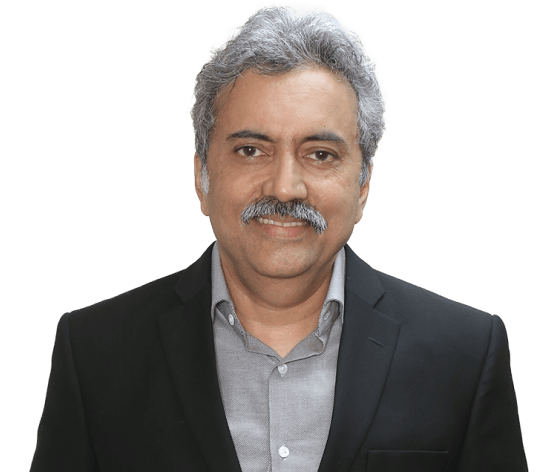
Parag Kothari
Parag Kothari is a private-credit investment professional with more than 25 years of experience in financial services, with a career spanning wholesale lending, corporate finance, investment banking and performing credit. He currently serves as Fund Manager – Performing Credit at EAAA India Alternatives, where he heads the ESOF Strategy (Edelweiss Special Opportunities Fund) under the Private Debt business. EAAA identifies him as part of its Performing Credit investment team.
View Profile →Our Investment Experts
Our experts will understand your goals, map the right strategy across AIFs, PMS, Mutual Funds and Wealth Solutions, and guide you through every step.
Find answers to common questions about fund investments, performance, portfolio strategy, and investor services.
Edelweiss Private Alternative Investment Trust is a Category II AIF registered under IN/AIF2/20-21/0782. EAAA's registration documents identify ESOF III Investment Fund as the scheme associated with the trust.
ESOF III is EAAA's third performing credit fund, providing structured financing to Indian companies for acquisitions, expansion, refinancing and buyouts. It reached final close in 2020 at about US$900 million, reported a fund size of ₹7,250 crore in 2026, and targets gross INR returns of 16–18%.
Yes. Edelweiss Private Alternative Investment Trust is registered with SEBI as a Category II AIF under IN/AIF2/20-21/0782. Category II AIFs include private credit, private equity and real estate funds that do not use leverage beyond operational needs. See ALTPORT's Category II AIF guide.
EAAA India Alternatives Limited manages the trust and ESOF III. Parag Kothari, EAAA's Fund Manager – Performing Credit, heads the ESOF strategy, supported by a team including Navin Bhutoria, Bishnu Agarwal and Shreyash Deshpande. Amit Agarwal, EAAA's CEO, oversees the private credit platform.
Yes. ESOF III returned 100% of drawn investor capital in July 2026, after realising about ₹8,700 crore from 15 of its 17 investments. This means investors have received back the capital they invested, not a 100% return, and two investments remain that could add further proceeds.
No. ESOF III reached final close in 2020 and has returned all drawn investor capital, so it is not accepting new investors. EAAA is currently deploying its fourth performing credit fund, ESOF IV, which investors can ask about instead.
SEBI sets a minimum investment of ₹1 crore per investor for AIFs (₹25 lakh for employees or directors of the manager), which is the regulatory floor for Edelweiss Private Alternative Investment Trust. ESOF III's exact commitment terms are set in its private placement memorandum.
The ESOF series, including ESOF III, targets gross INR returns of 16–18%. EAAA said in July 2026 that ESOF III remains on track to meet its target. Targets are not guaranteed, and net returns to investors will be lower after fees and expenses.
The main risks of a private credit AIF like ESOF III are borrower default, slow or partial recovery, illiquidity, valuation uncertainty, concentration in a few borrowers, structuring risk, delayed exits, and changes in interest rates and the economy.
As a Category II AIF, Edelweiss Private Alternative Investment Trust has pass-through tax status for eligible income other than business income, so that income is taxed in investors' hands. Business income is taxed at the fund level. The final tax depends on the income type and current law, so take professional tax advice.
Subscribe to the ALTPORT newsletter
Join HNIs, family offices and NRI investors reading with us.
You're on the list
Thanks — we've added your email to the ALTPORT newsletter.