

About Company
ICICI Prudential AMC Ltd.
Icici Prudential is a major asset management company in the country, focusing on bridging the gap between saving and investing and building long-term wealth for investors through a variety of easy and relevant investment solutions. The AMC is a joint venture between ICICI Bank and Prudential plc, one of the major financial services companies in the United Kingdom.
Fund Snapshot
| Feature | Details |
| Strategy Name | PIPE Strategy (Series II) |
| Investment Objective | Long-term capital appreciation by investing in mid/small-caps with moats or in special situations. |
| Inception Date | September 5, 2019 |
| Benchmark | S&P BSE 500 TRI |
| Minimum Investment | ₹50 Lakh |
| Fund Manager | Anand Shah, Chockalingam Narayanan |
| AUM (Scheme) | ₹7,379.77 Cr |
| Number of Holdings | 34–38 Stocks |
| Market Cap Bias | ~80% Small-cap, ~19% Mid-cap |
| Scheme Return (1-Year) | ~12.97% (Benchmark: -11.37%) |
| Returns Since Inception | ~34.40% CAGR (Benchmark: ~22.90%) |
Investment Philosophy
ICICI Prudential AMC follows a disciplined, research-driven investment approach focused on delivering consistent, risk-adjusted returns across market cycles:
- Focus on Risk-Adjusted Returns Core objective is to generate superior returns while managing downside risks across varying market conditions.
- Blend of Quantitative & Qualitative Research Investment decisions are driven by a mix of financial analysis, macro insights, and evaluation of management quality and governance standards.
- Asset Allocation & Diversification Strong emphasis on diversified portfolios across equity, debt, and hybrid strategies to balance growth and stability.
- Fixed Income Discipline Debt investments prioritize safety, liquidity, and optimal returns, ensuring capital protection alongside yield generation.
- Robust Risk Management Framework Independent risk oversight, continuous monitoring, and proactive measures help safeguard investor interests and manage volatility.
- Long-Term Investing Approach Encourages disciplined investing through SIPs and long-term holding to benefit from compounding and market cycles.
- Investor-Centric Strategy Product innovation and portfolio positioning are aligned with evolving investor needs, risk appetites, and market opportunities.
Listen to expert conversations and investment insights anytime on Spotify.

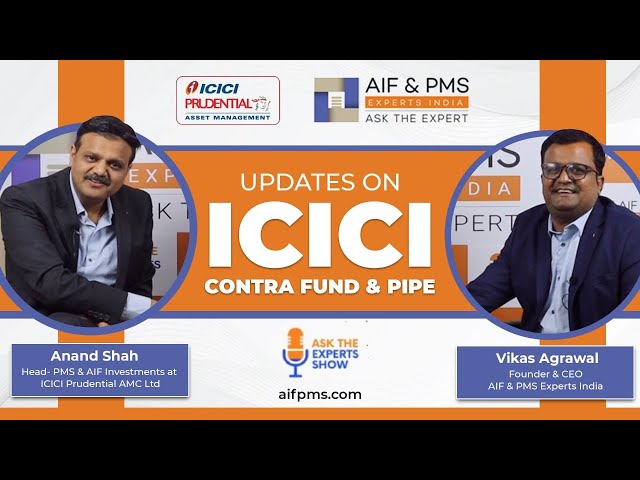
Learn about the experienced fund managers responsible for investment decisions, portfolio strategy, and long-term fund performance.

Nimesh Shah
View Profile →Our Investment Experts
Our experts will understand your goals, map the right strategy across AIFs, PMS, Mutual Funds and Wealth Solutions, and guide you through every step.
Find answers to common questions about fund investments, performance, portfolio strategy, and investor services.
PIPE stands for Private Investment in Public Equity. In this PMS, it represents a philosophy where the manager evaluates public companies as if they were private equity deals. The focus is on finding companies with "economic moats"—strong competitive advantages—that are undervalued due to temporary issues like sector downturns or corporate restructurings.
The fund uses an internal BMV (Business, Management, Valuation) framework. It looks for prominent businesses with competent management and reasonable valuations. A key goal is to find "growth stories" where earnings per share (EPS) growth is expected to lead to a price-to-earnings (P/E) re-rating as the market recognizes the company's true value.
Because the portfolio is heavily tilted toward small and mid-cap segments (often over 80% in small-caps), it carries higher volatility and potentially lower liquidity than large-cap strategies. The success of the strategy depends on the fund manager's ability to correctly identify turnarounds in "special situations" which may take longer than expected to materialize.
The strategy is designed for long-term investors and uses a tiered exit load to discourage short-term churning. Usually, redemptions within the first year attract a 3% fee, the second year attracts 2%, and the third year attracts 1%. There is typically no exit load for redemptions made after three years of investment.
Given the focus on business turnarounds and the inherent volatility of the small-cap segment, the recommended investment horizon is 5 years or more. This timeframe allows the underlying "recovery" or "special situation" themes to play out and helps mitigate the impact of short-term market fluctuations.
Subscribe to the ALTPORT newsletter
Join HNIs, family offices and NRI investors reading with us.
You're on the list
Thanks — we've added your email to the ALTPORT newsletter.